
Due to snowfall on the first Sunday of the month, this month’s walk was postponed by a week.
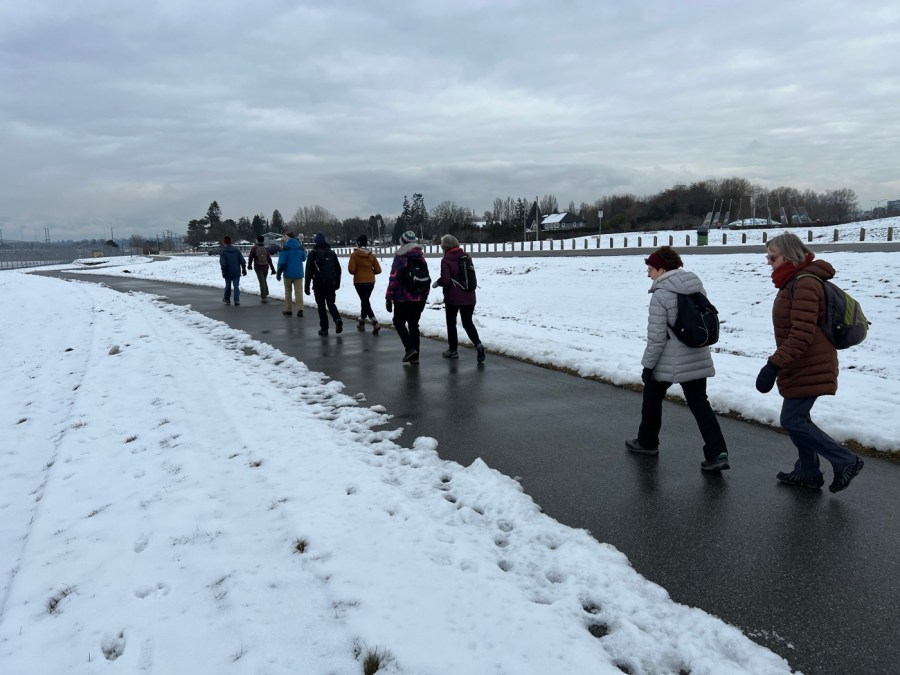
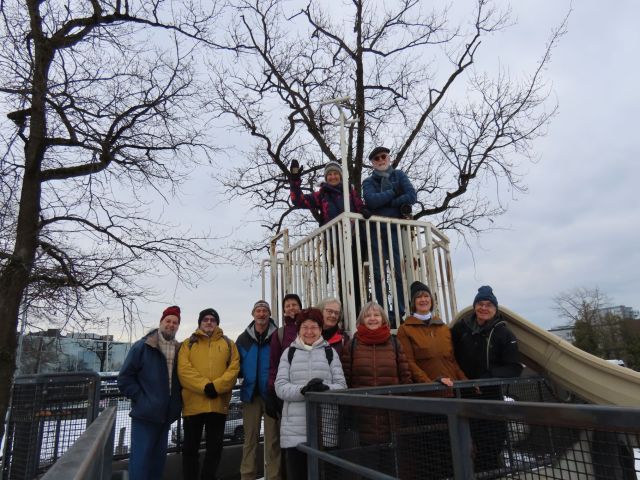
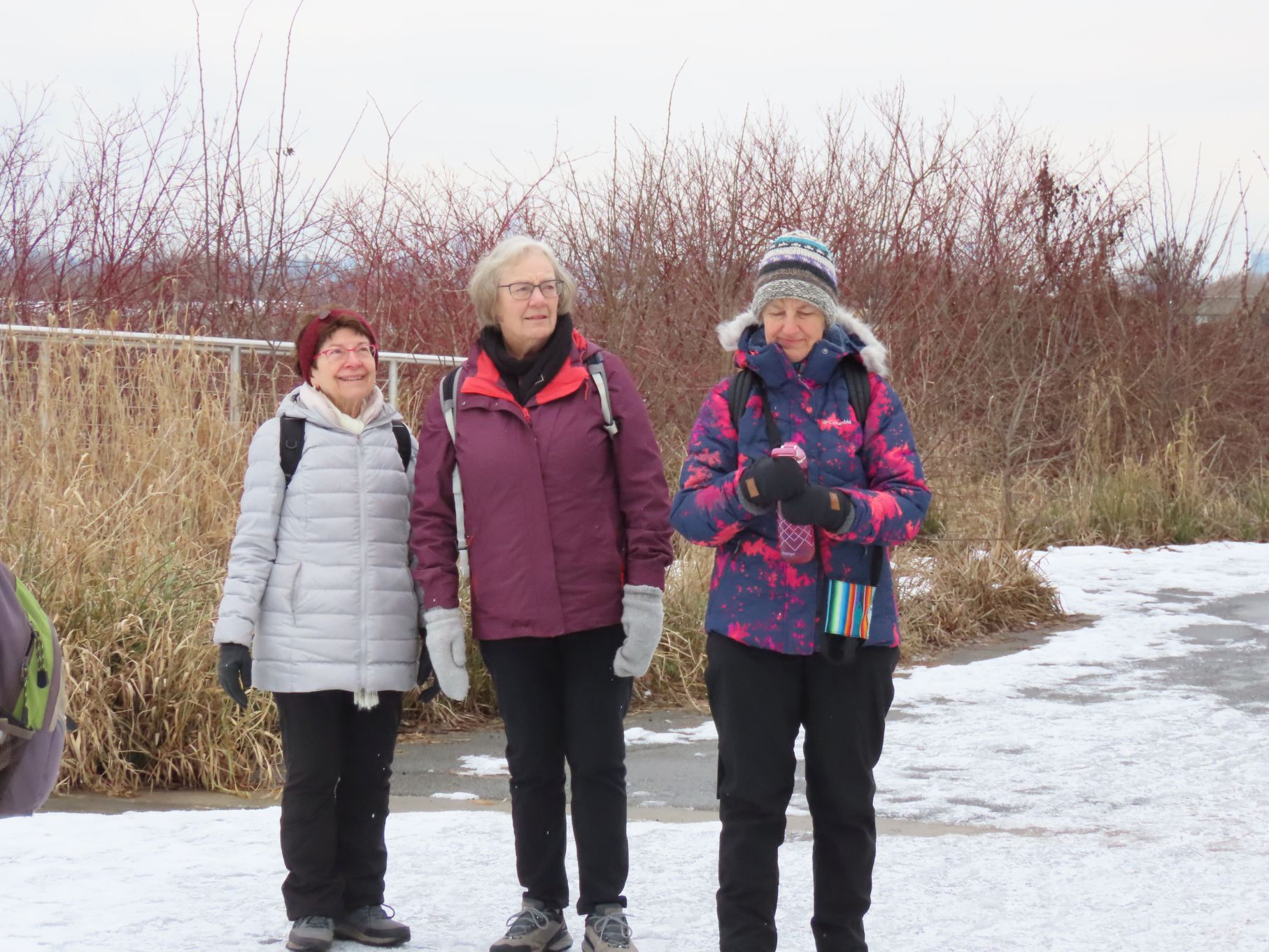
Eleven Loopers gathered on the shore of the middle arm of the Fraser River, adjacent to the UBC Boathouse, under high clouds and in cool temperatures. The boathouse, officially called the John M.S. Lecky UBC Boathouse, is the home of the UBC Thunderbirds rowing program. The facility is named in memory of a former UBC rower who won a silver medal in the men’s eight at the 1960 Rome Olympics.

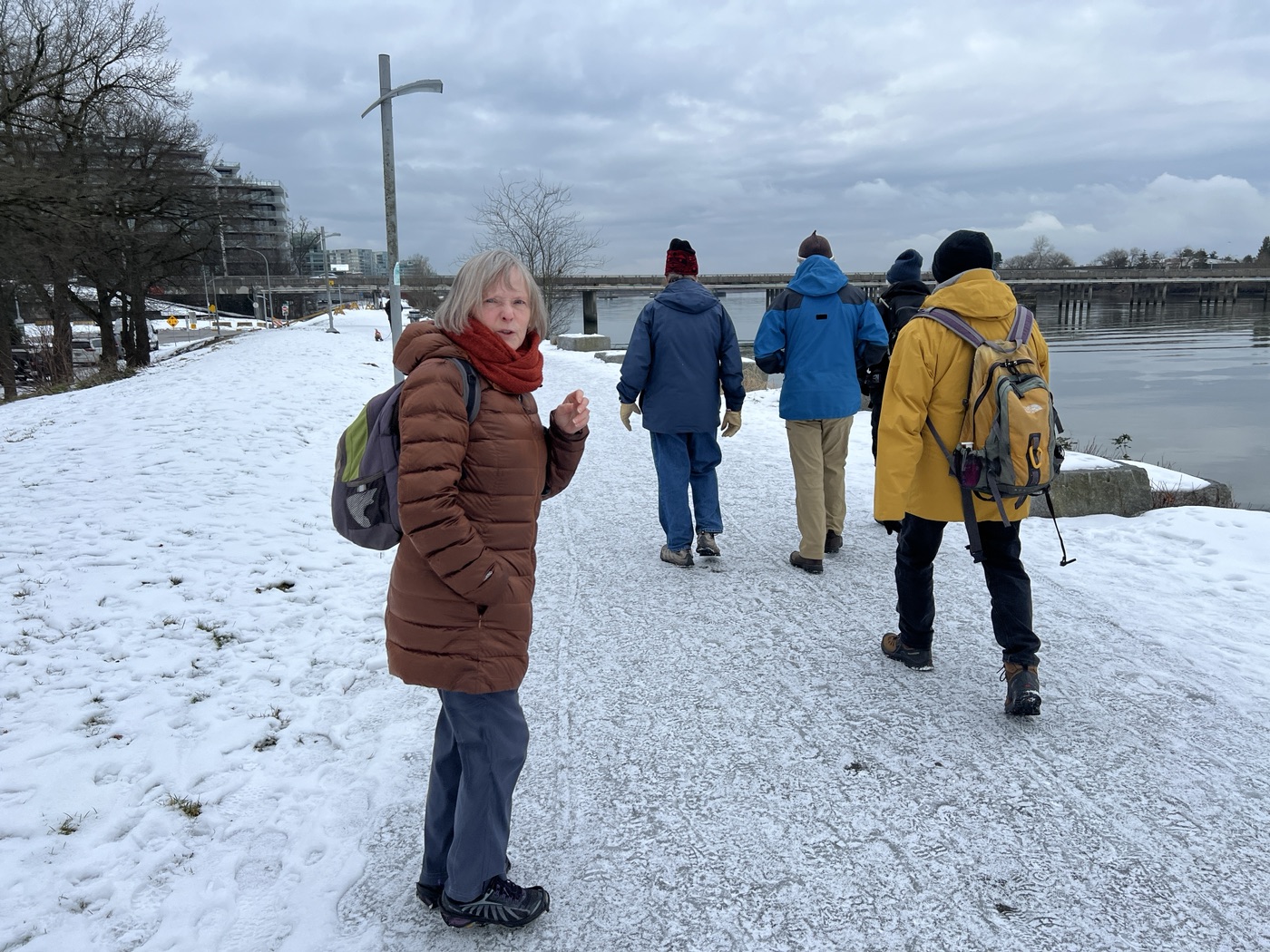
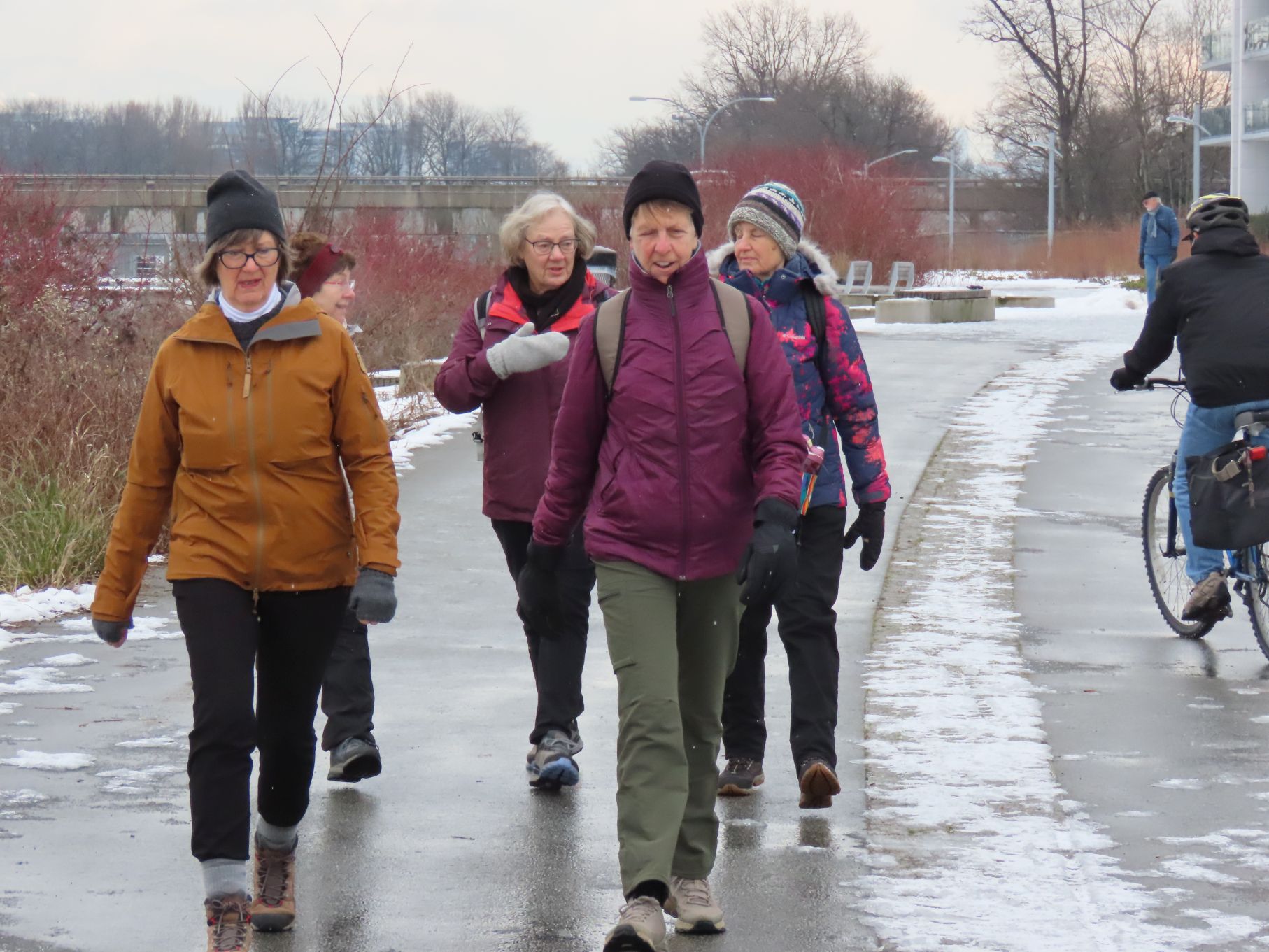
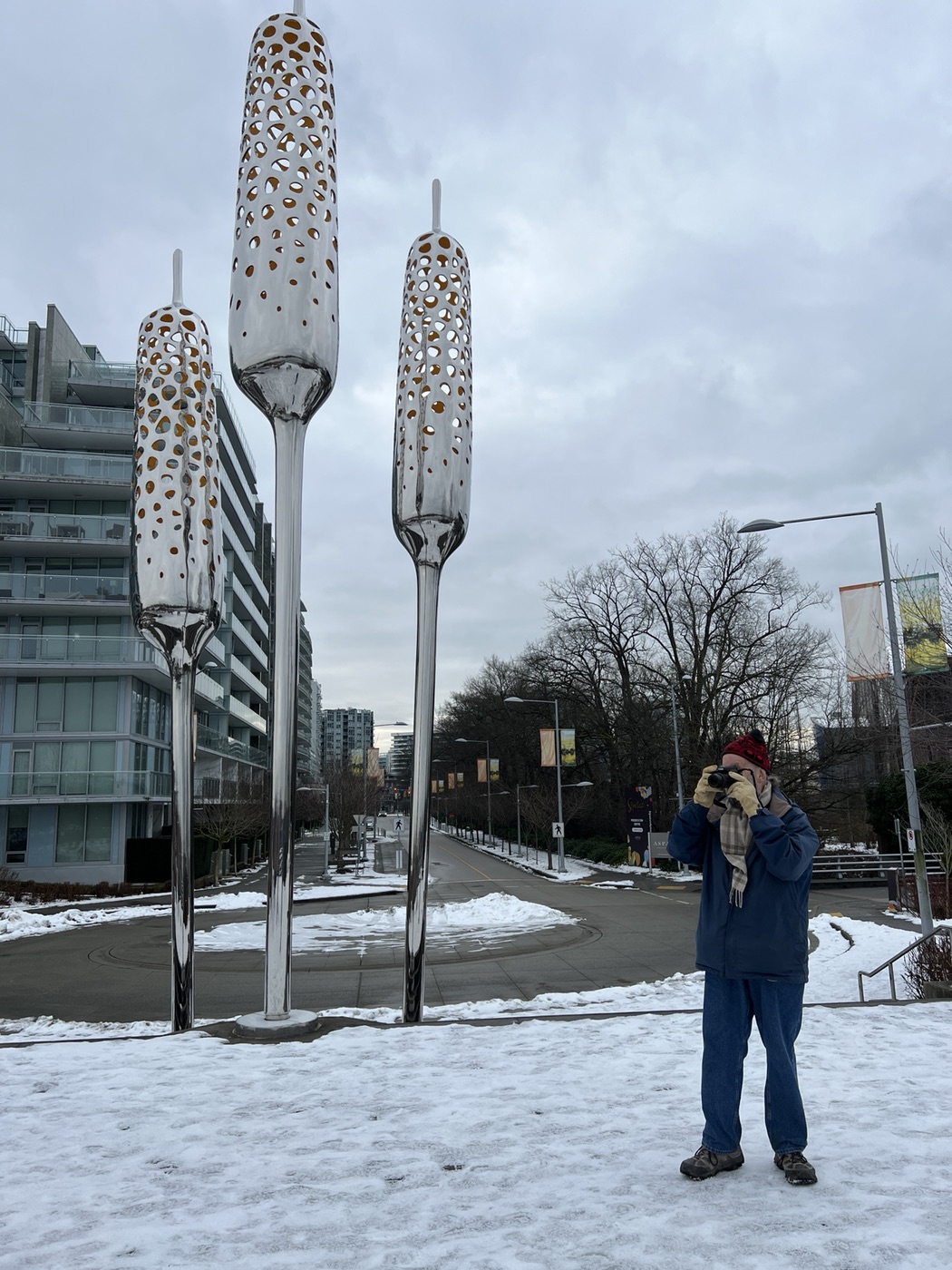
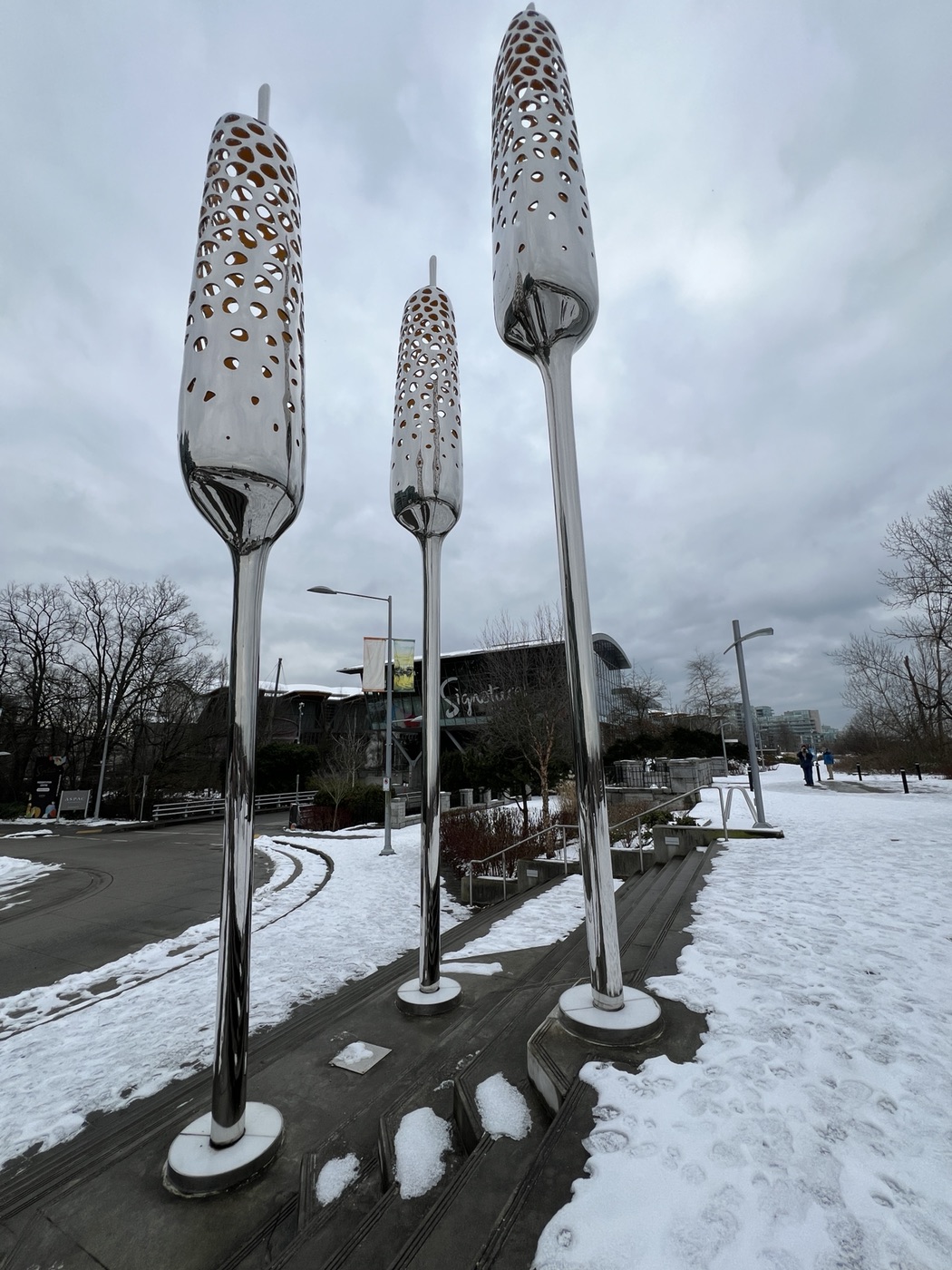
We headed southwest along the river toward the Richmond Olympic Oval. It is remarkable how the area has changed, with large condo developments along the way. At the foot of Hollybridge Way we stopped to admire s recent sculpture called Typha.
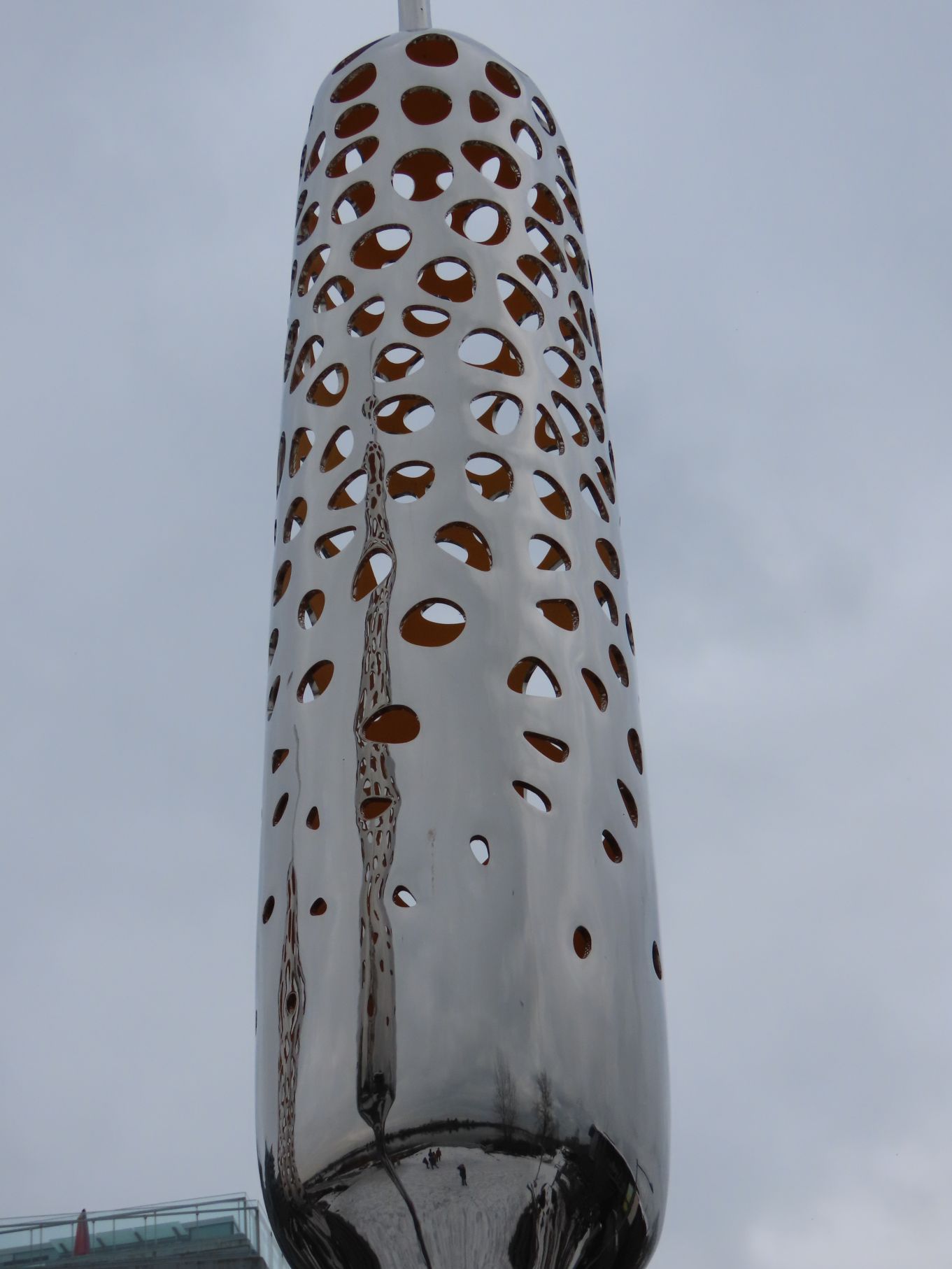
The sculpture is a re-imagining of the typha plant composed of three abstract forms made of 316L Marine Grade Stainless Steel. The outer surface of the sculpture is polished to a mirror finish and the inner surfaces are painted in a golden yellow hue. LED lights are installed inside the main flower, providing a soft glow through its perforated cellular pattern at night. Ground-based lighting create a glowing effect at the base of the pieces, further enhances the piece’s visibility and allure as a welcoming beacon to the space.
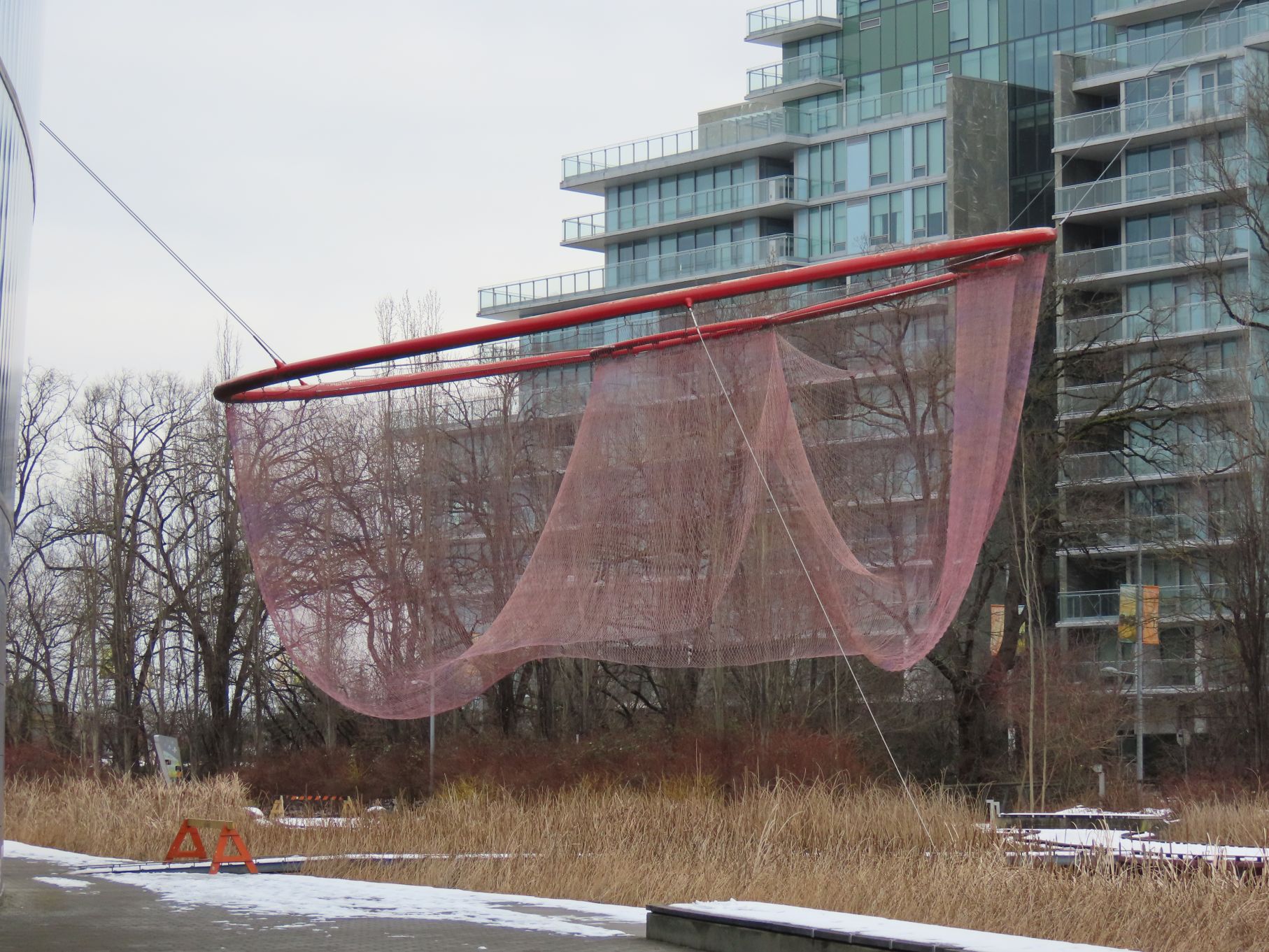
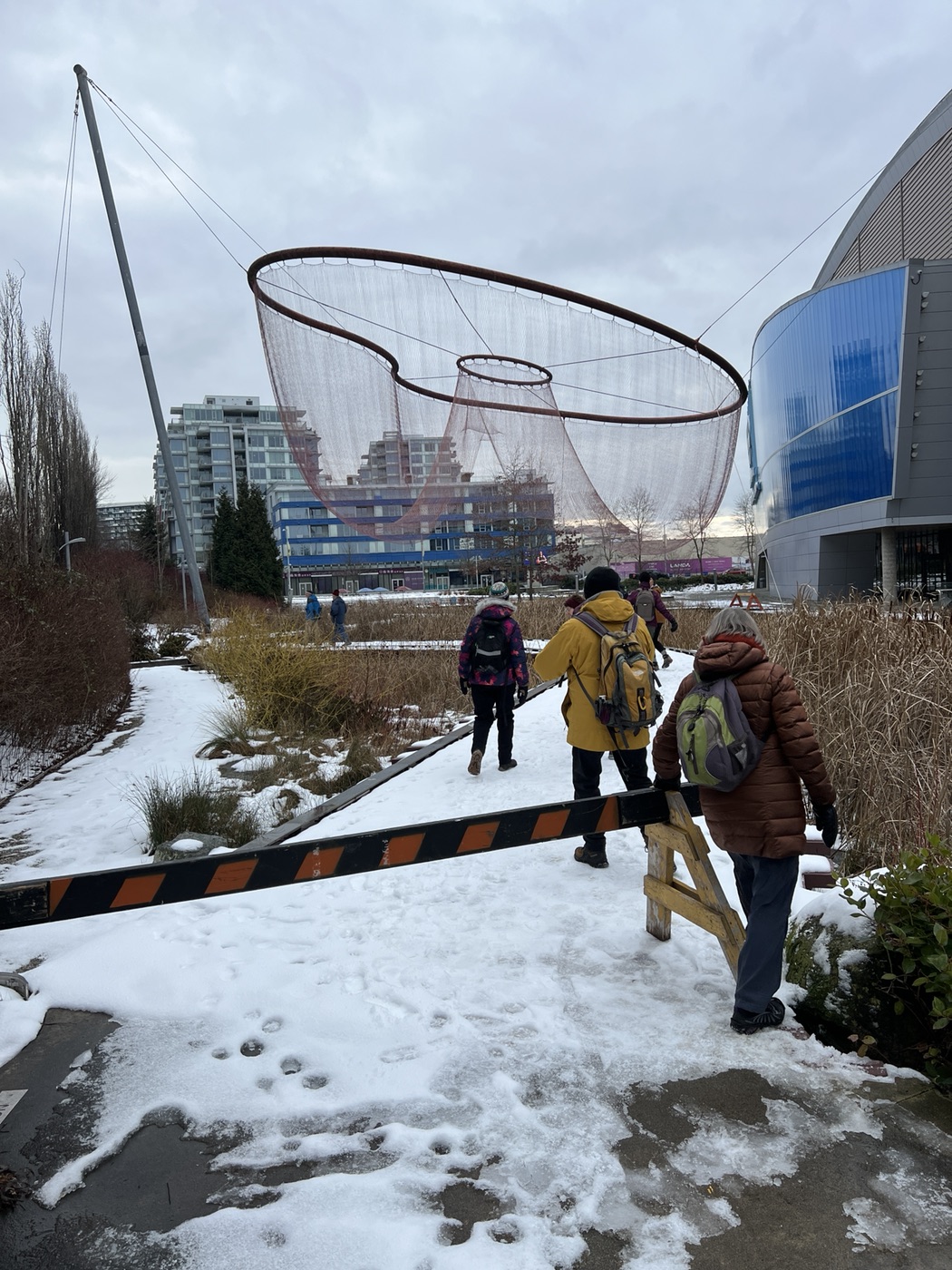
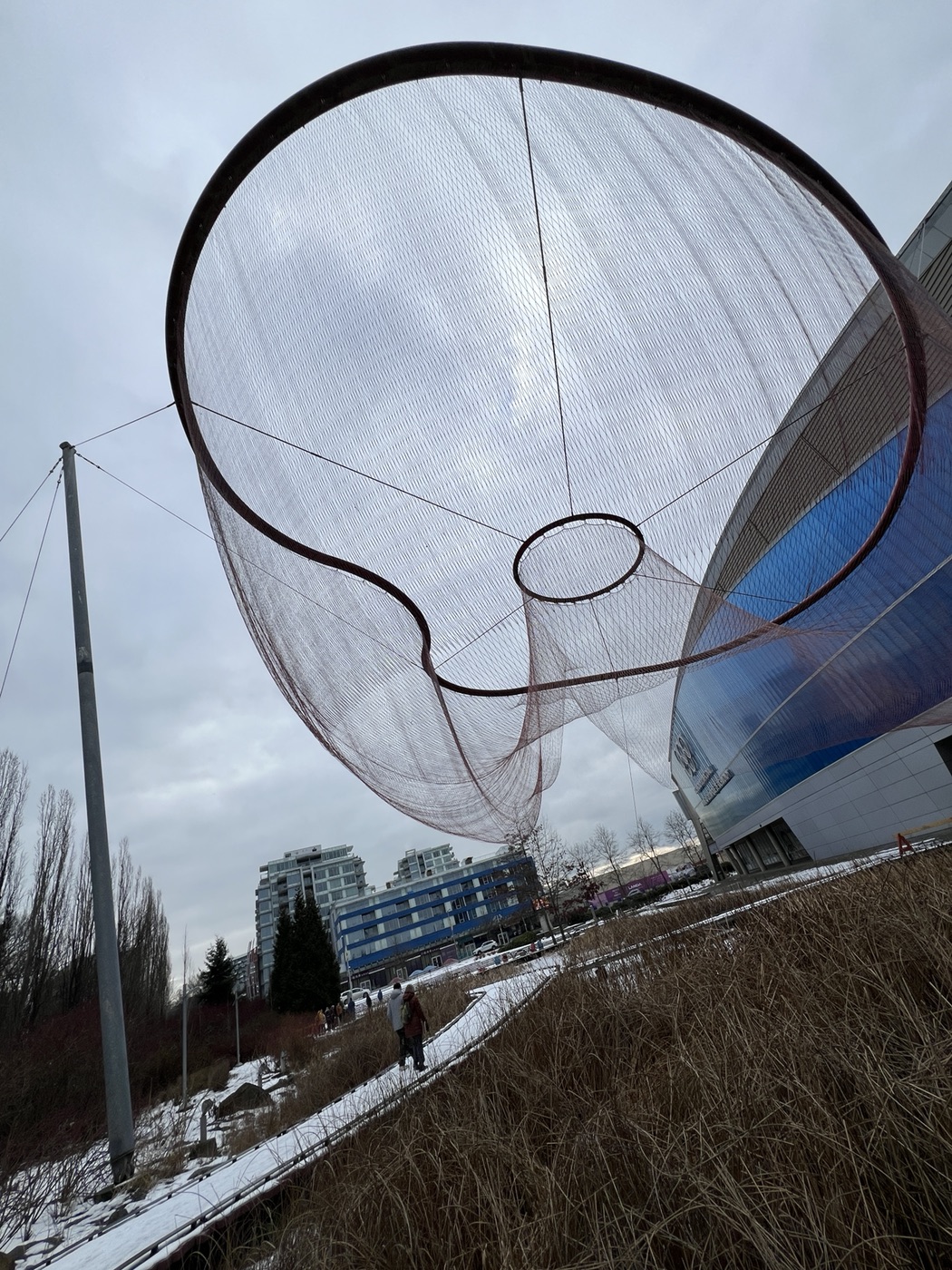
Upon approaching the Olympic Oval we walked around the east side of the building through a sculptural installation called Water Sky Garden. The installation includes a wet-land pond, boardwalk, two. pedestrian bridges, two net sculptures, and a fountain.
Visitors approach by a red boardwalk or intersecting bridges over a water garden. Above their heads, visitors see massive red, netted “sky lanterns” moving in the wind. Below they see “water drawing” amidst the reflections in the pond.
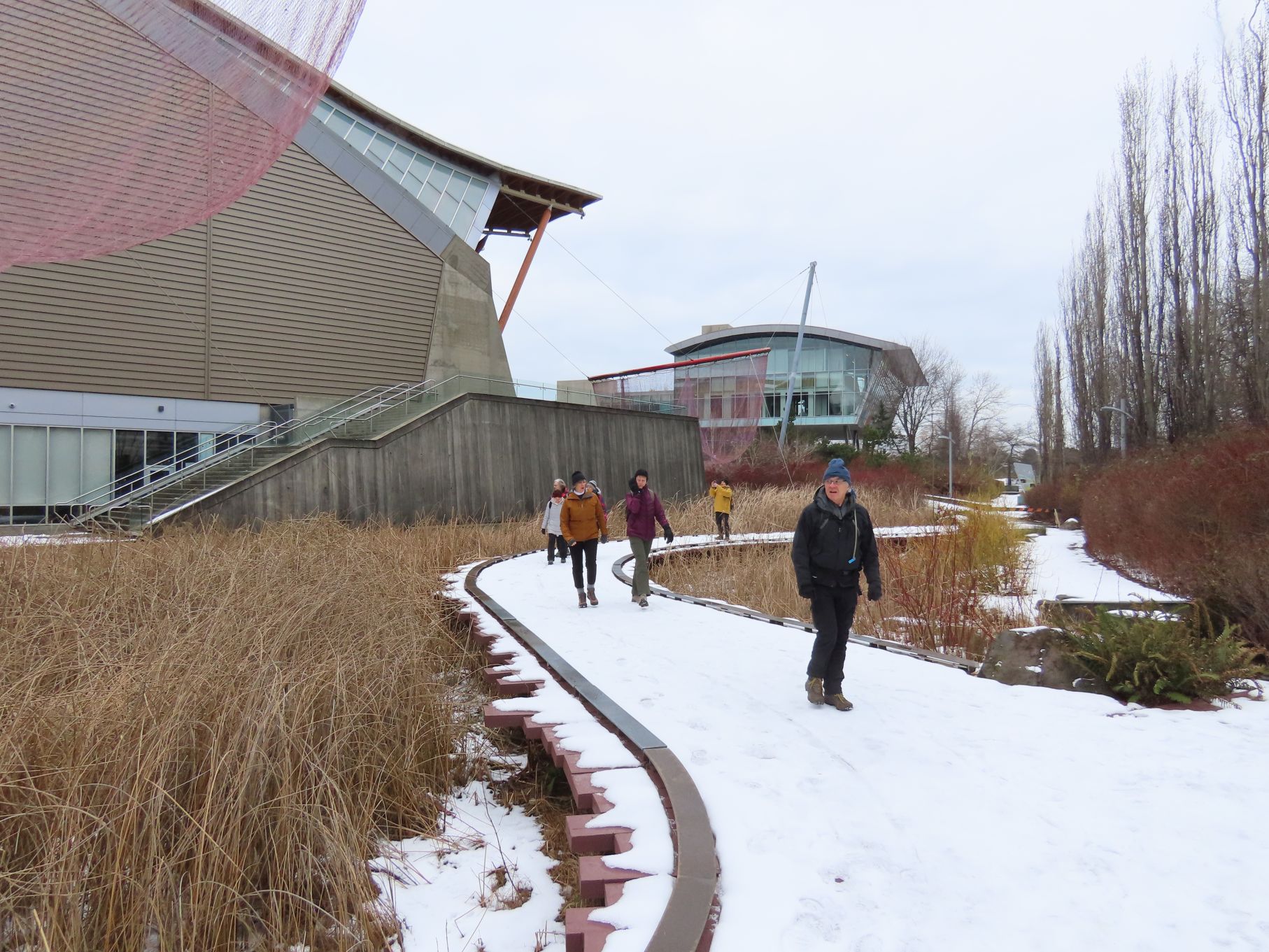
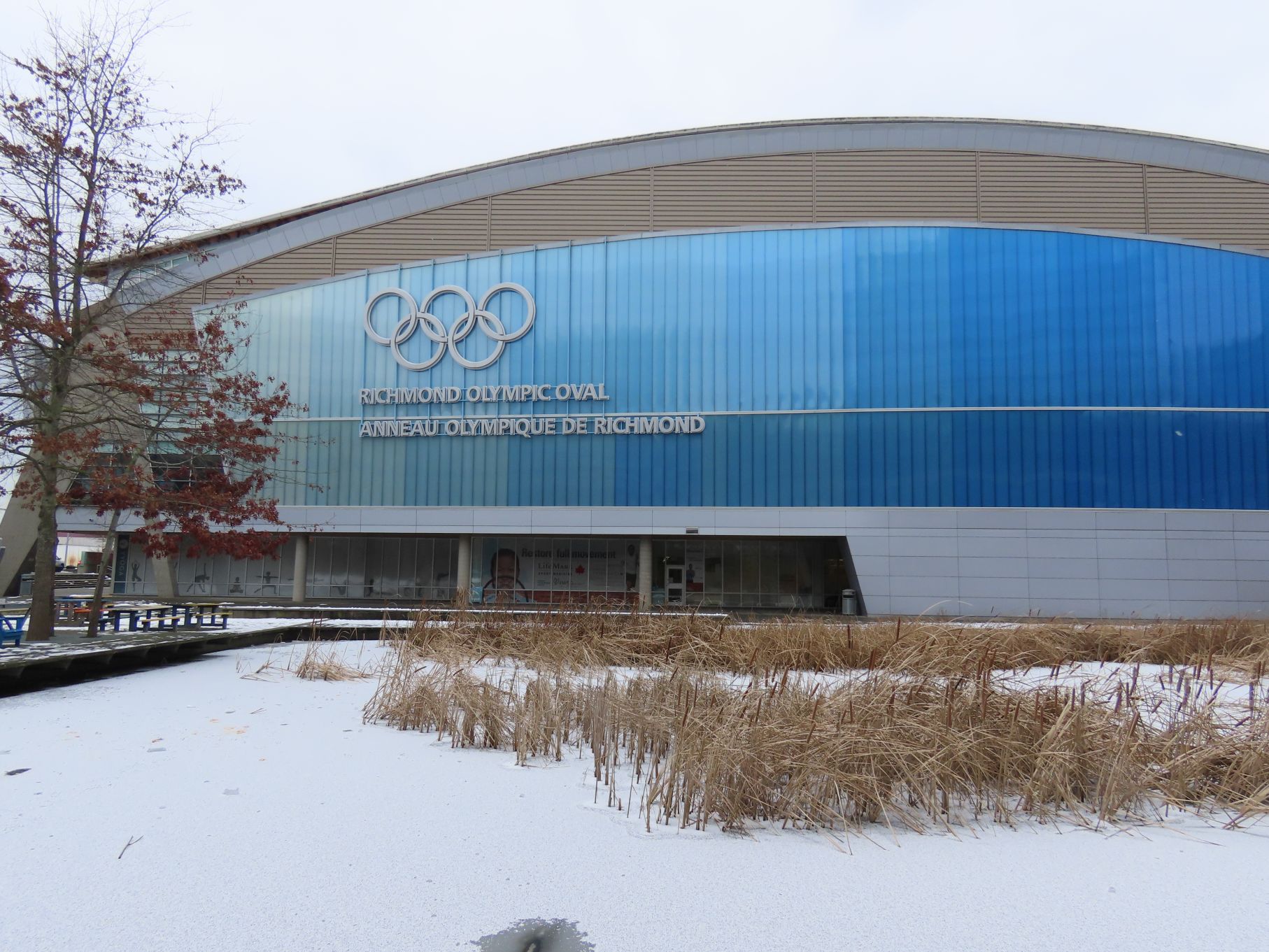
The Richmond Olympic Oval was initially built to serve as the speed-skating venue for the 2010 Winter Olympics, with a 400 metre speed skating rink and seating for 8000 spectators. After the games it was reconfigured and now contains 2 hockey rinks, 10 basketball courts, a running track, a fitness centre, and a climbing wall.

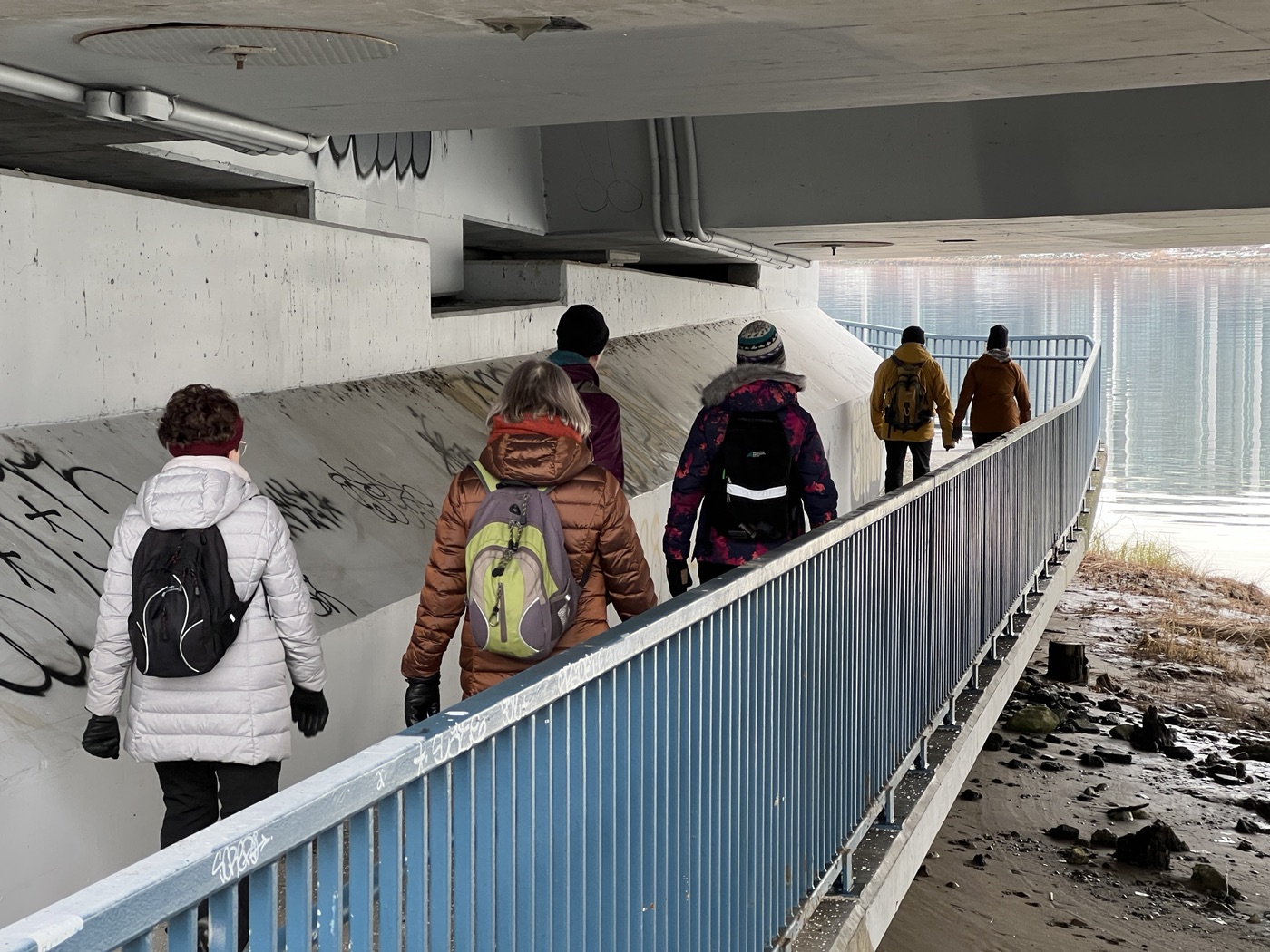
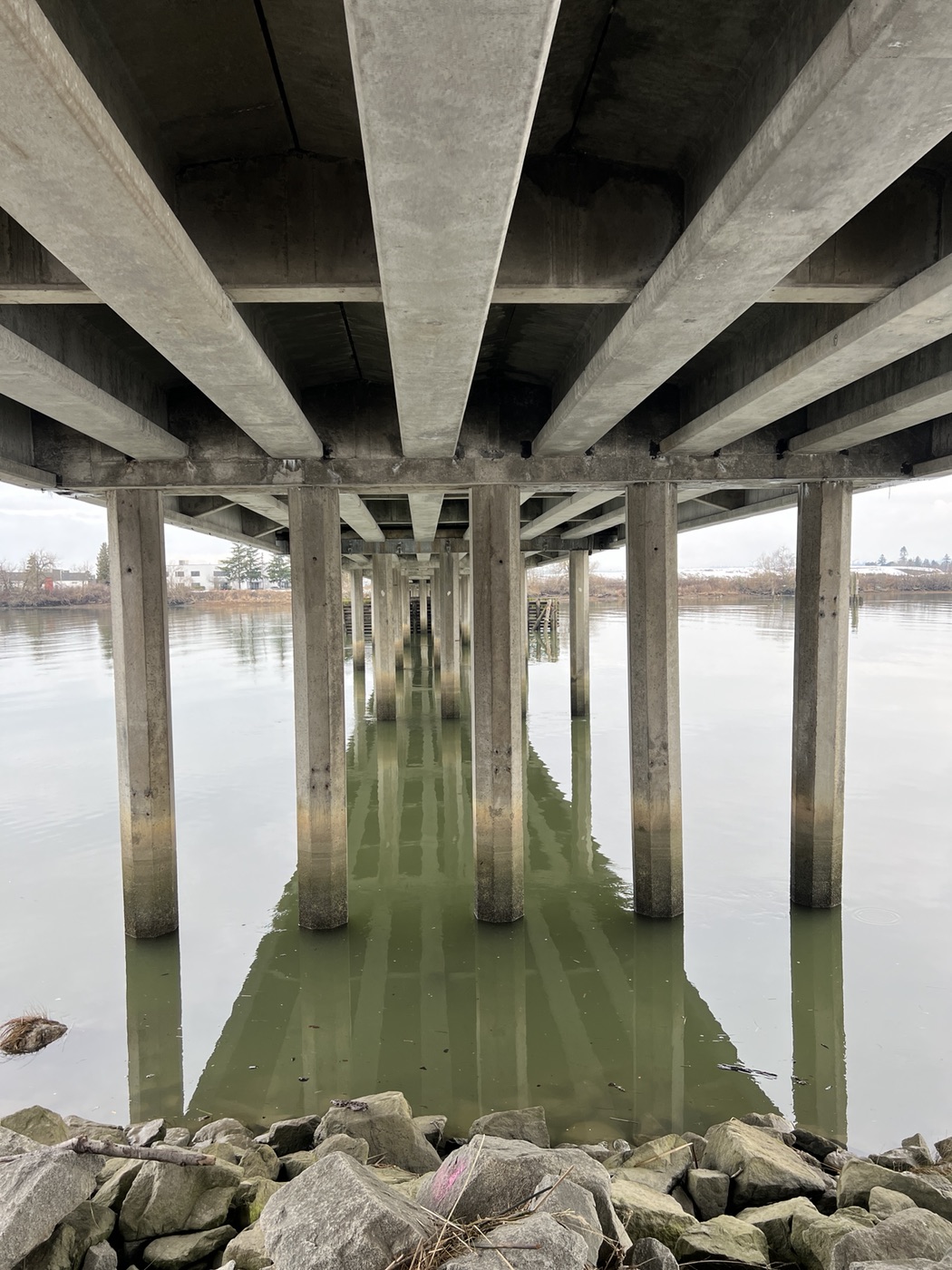
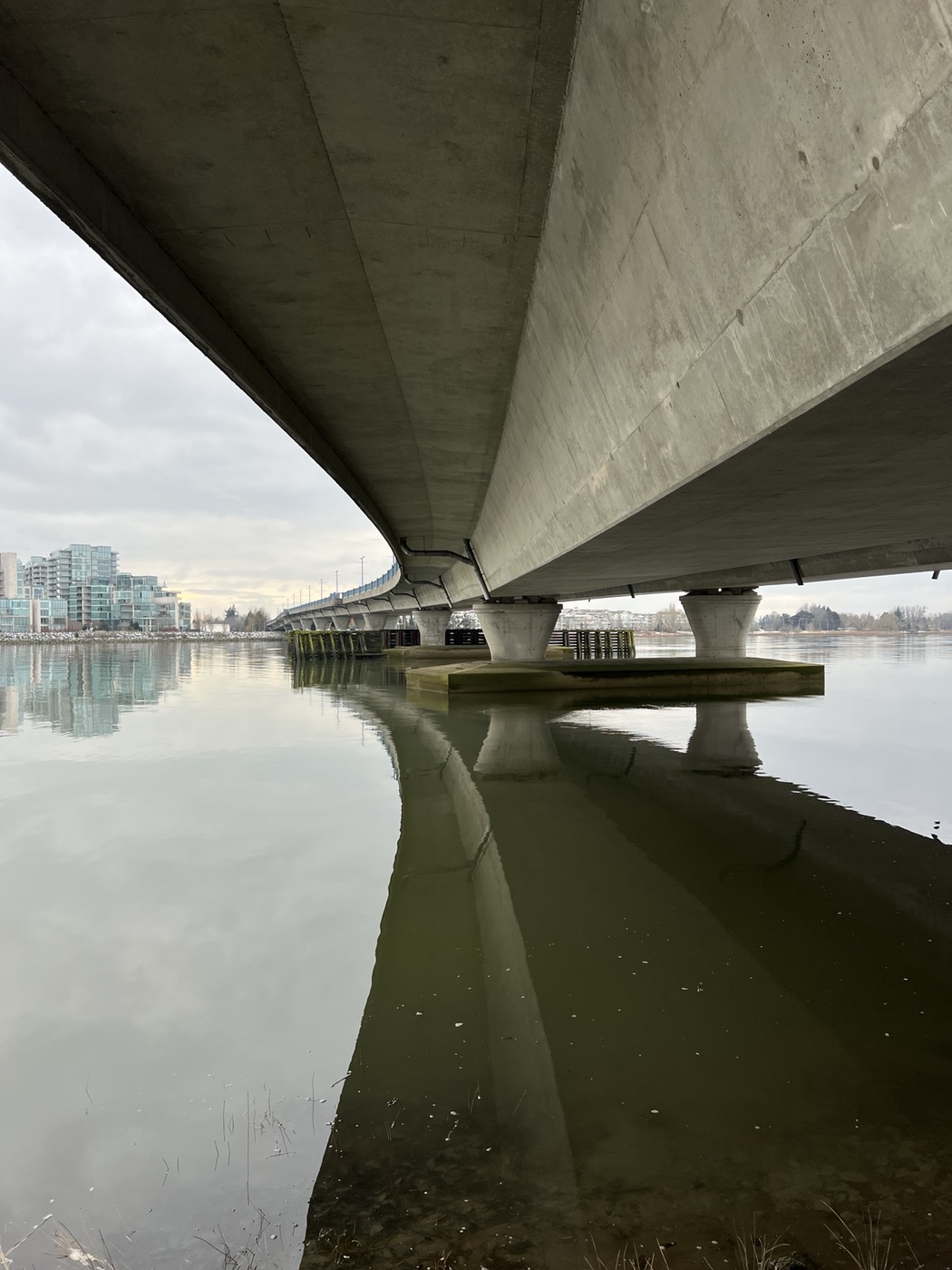
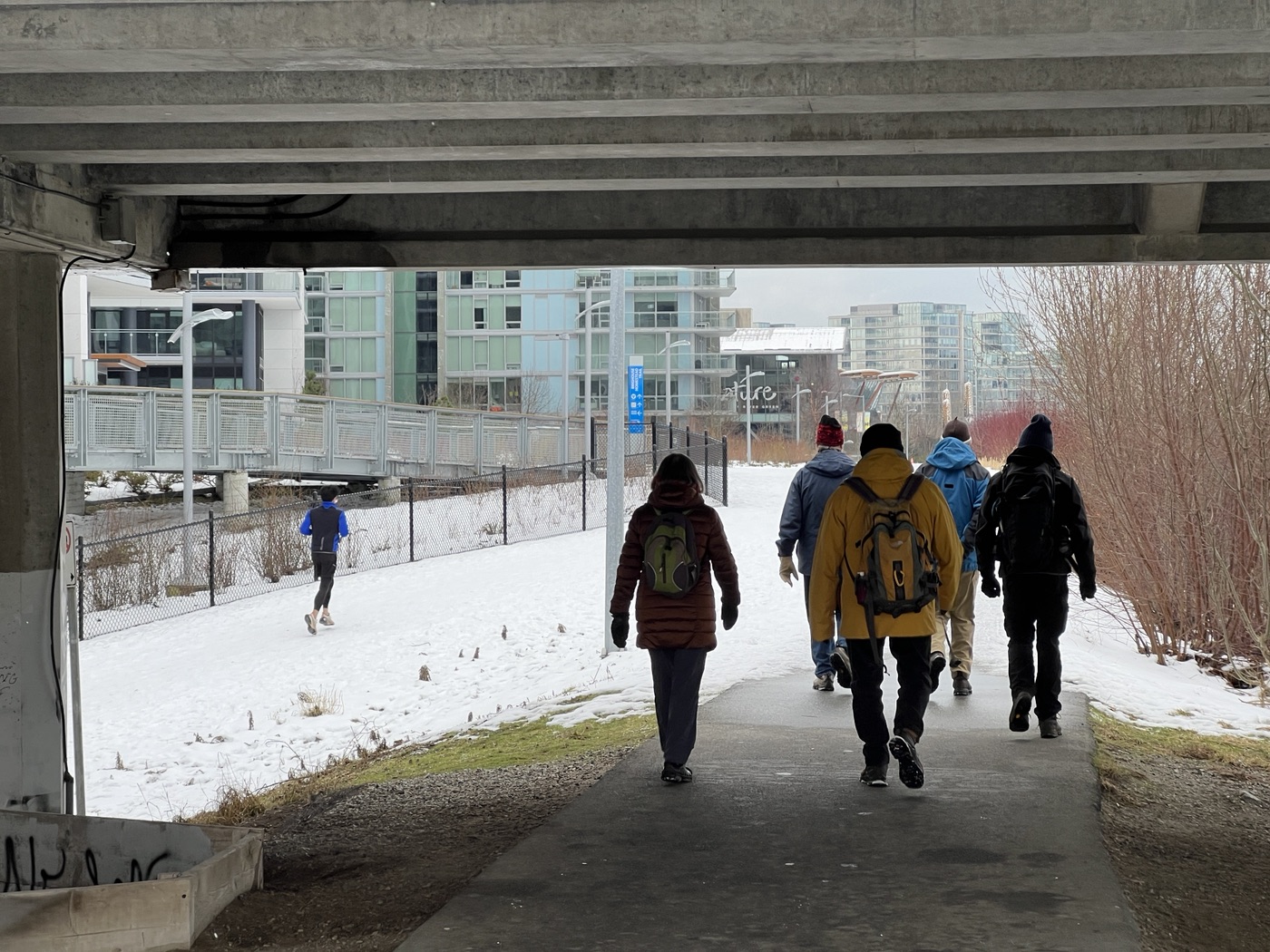
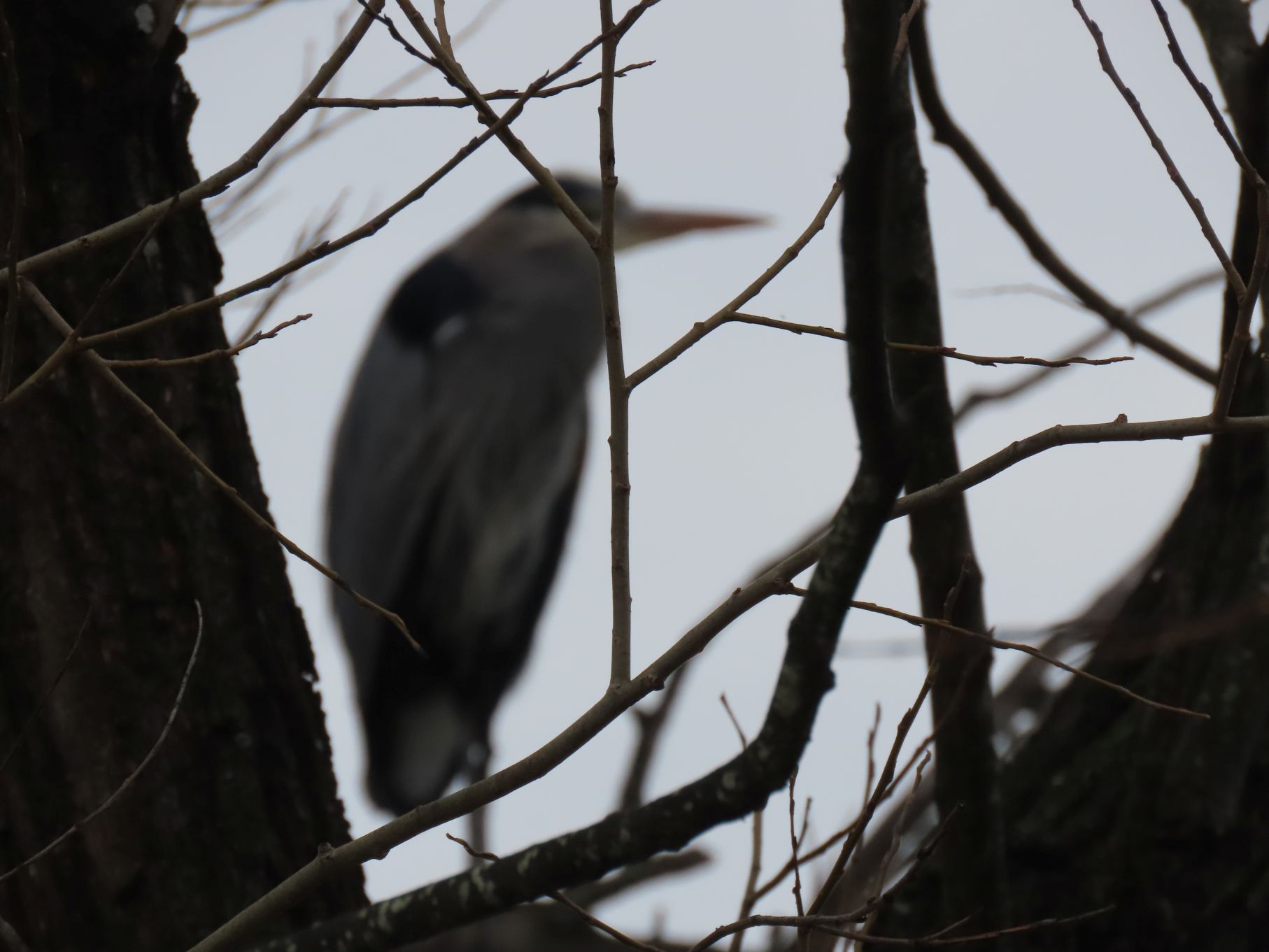
Upon leaving the Oval we headed further westward, passing yet another condo development before crossing the river over the No 2 Road Bridge. Ducking under the bridge we made our way along the river to Gilbert Road, spotting a heron along the way. From there we walked up Gilbert to Russ Baker way and followed the path around to the east end of the airport and Larry Berg Flightpath Park.
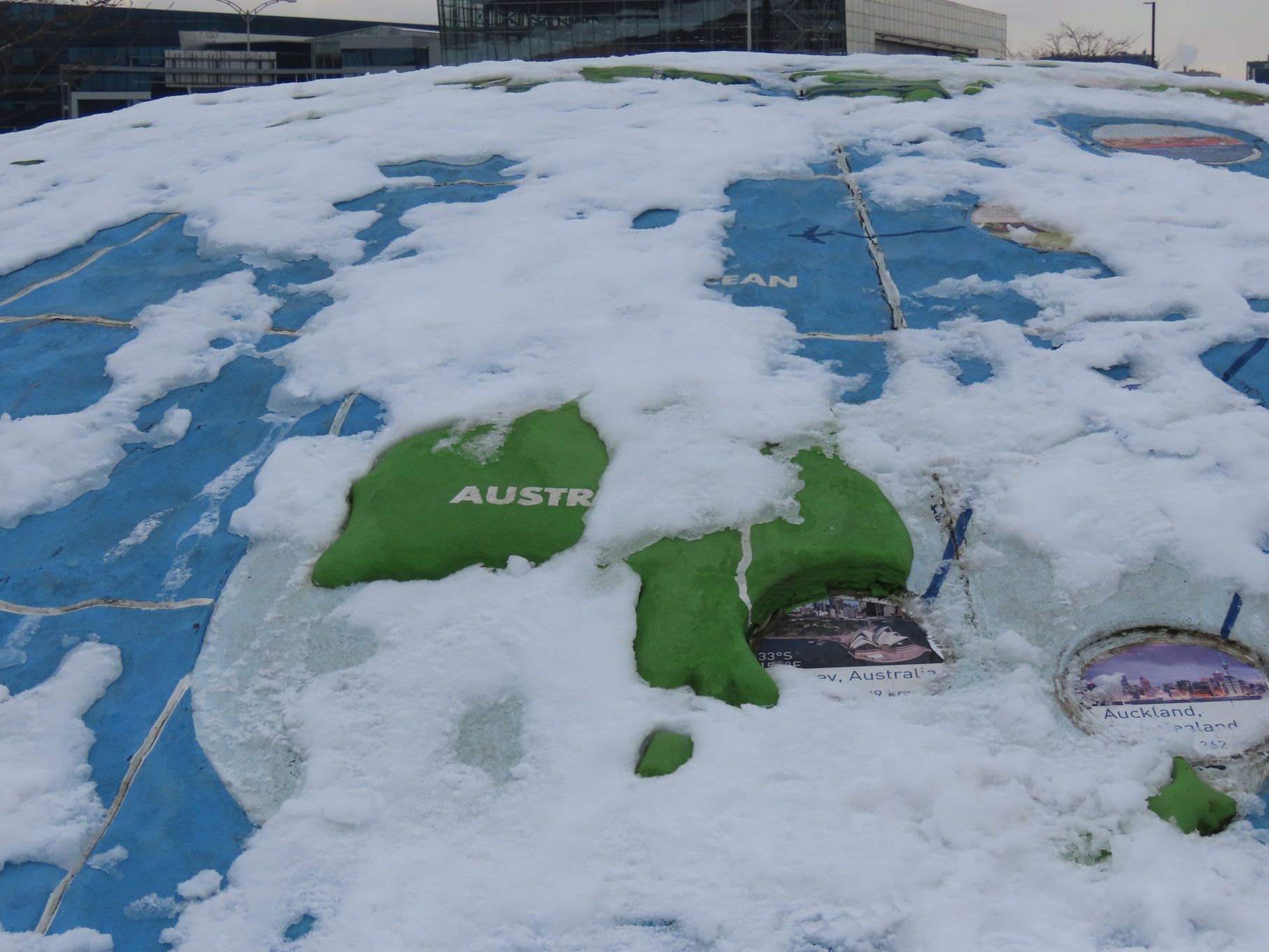
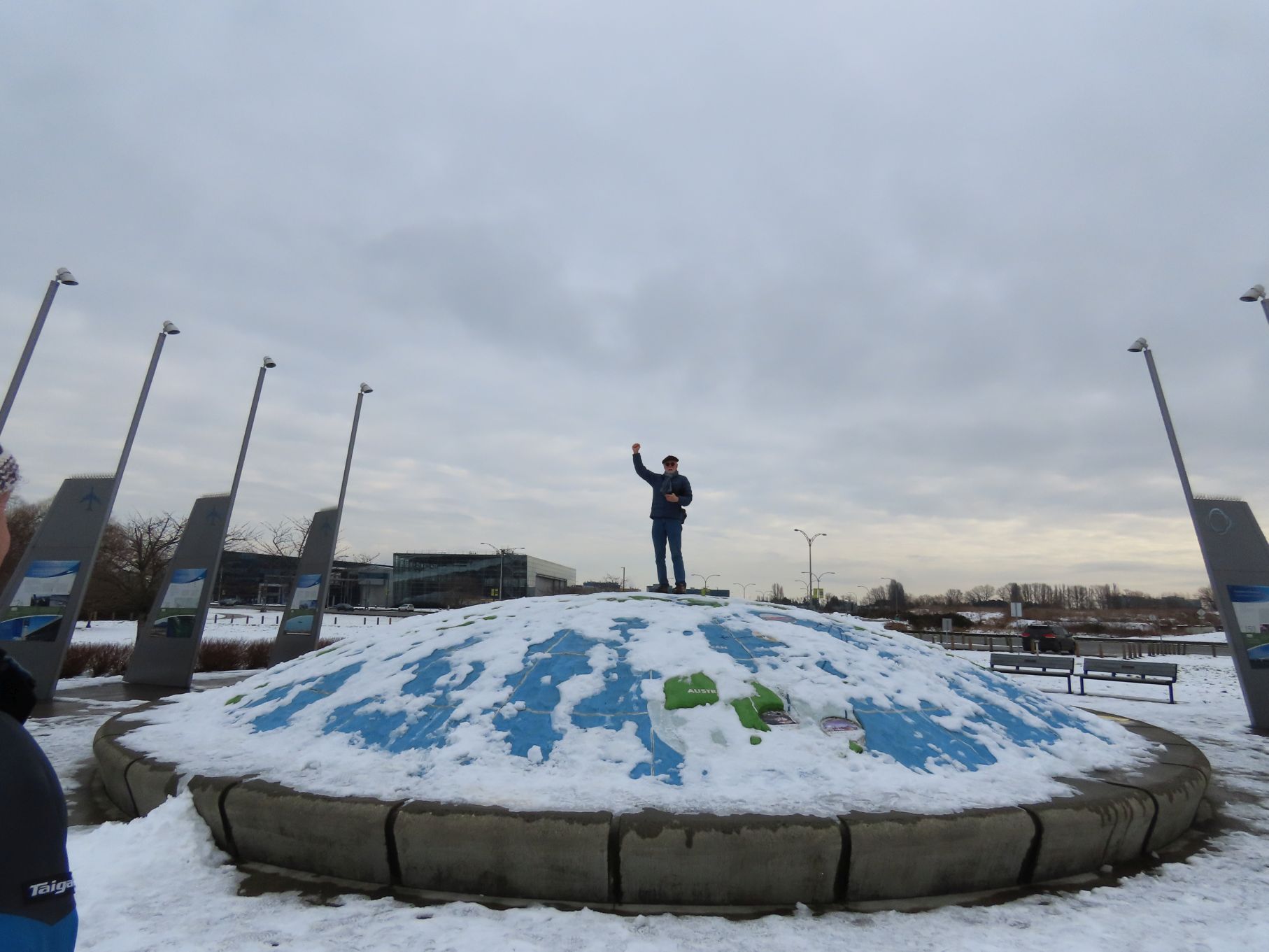
The park is named after Larry Berg, a retired YVR president and CEO, and is directly in line with the airport’s south runway. The park includes walking trails and runway paths that mirror the markings and lights of real runways (unfortunately obscured by the snow during our visit). There is also a large hemispheric globe showing the distances from YVR to various world cities.

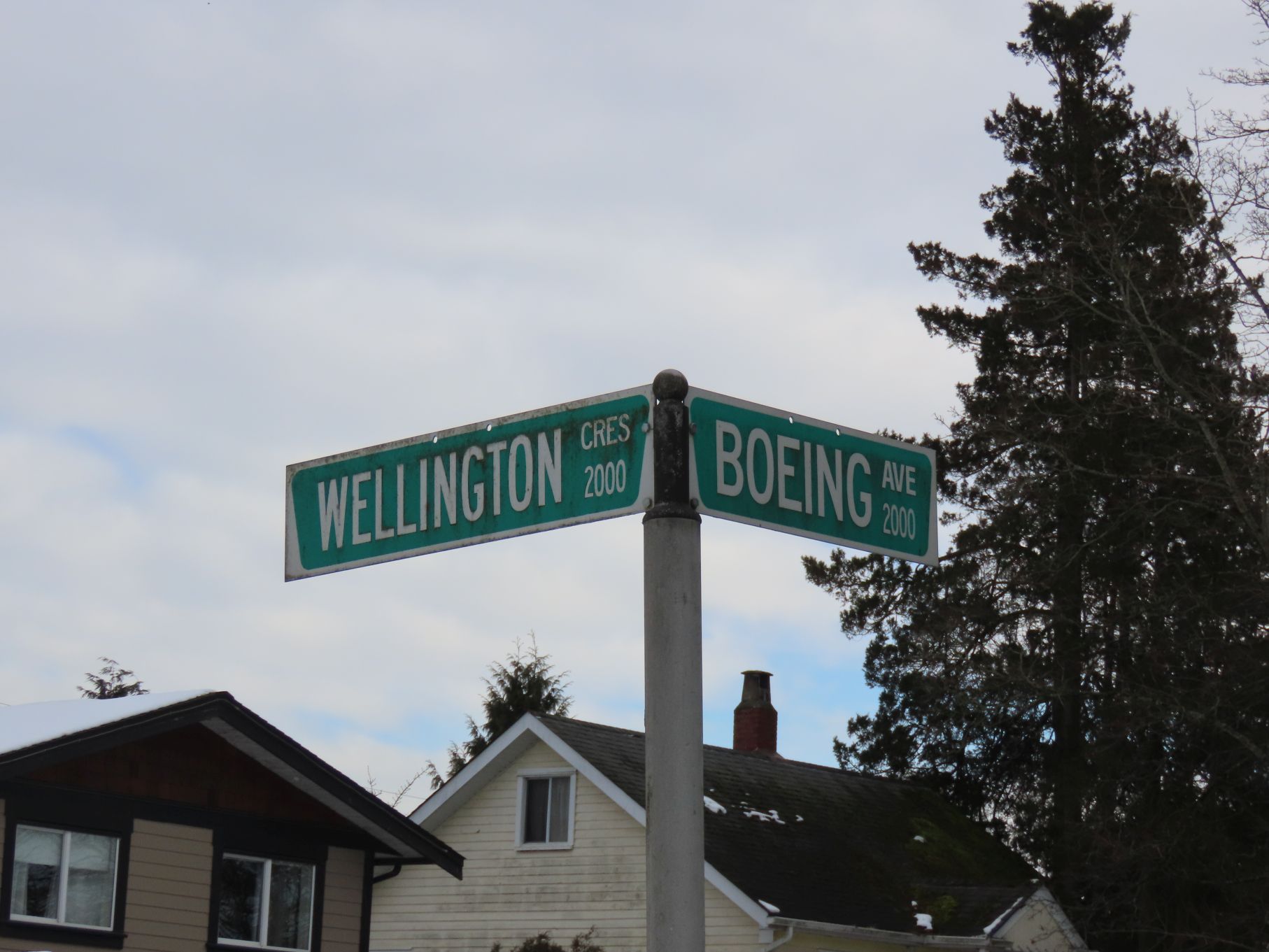
We walked along another relatively new path between the village of Burkeville and the airport. Burkeville is the last remaining residential community on Sea Island. Boeing had a large plant on the island during WWII where they manufactured Catalina flying boats and fuselages for B29 bombers. Burkeville was established to provide housing for the workers. It was named after Stanley Burke, a president and CEO of Boeing Canada. All the streets were named after wartime aircraft. [A personal note here: my paternal grandfather worked at the Boeing plant, but it is unclear for how long or in what capacity – a family mystery.]
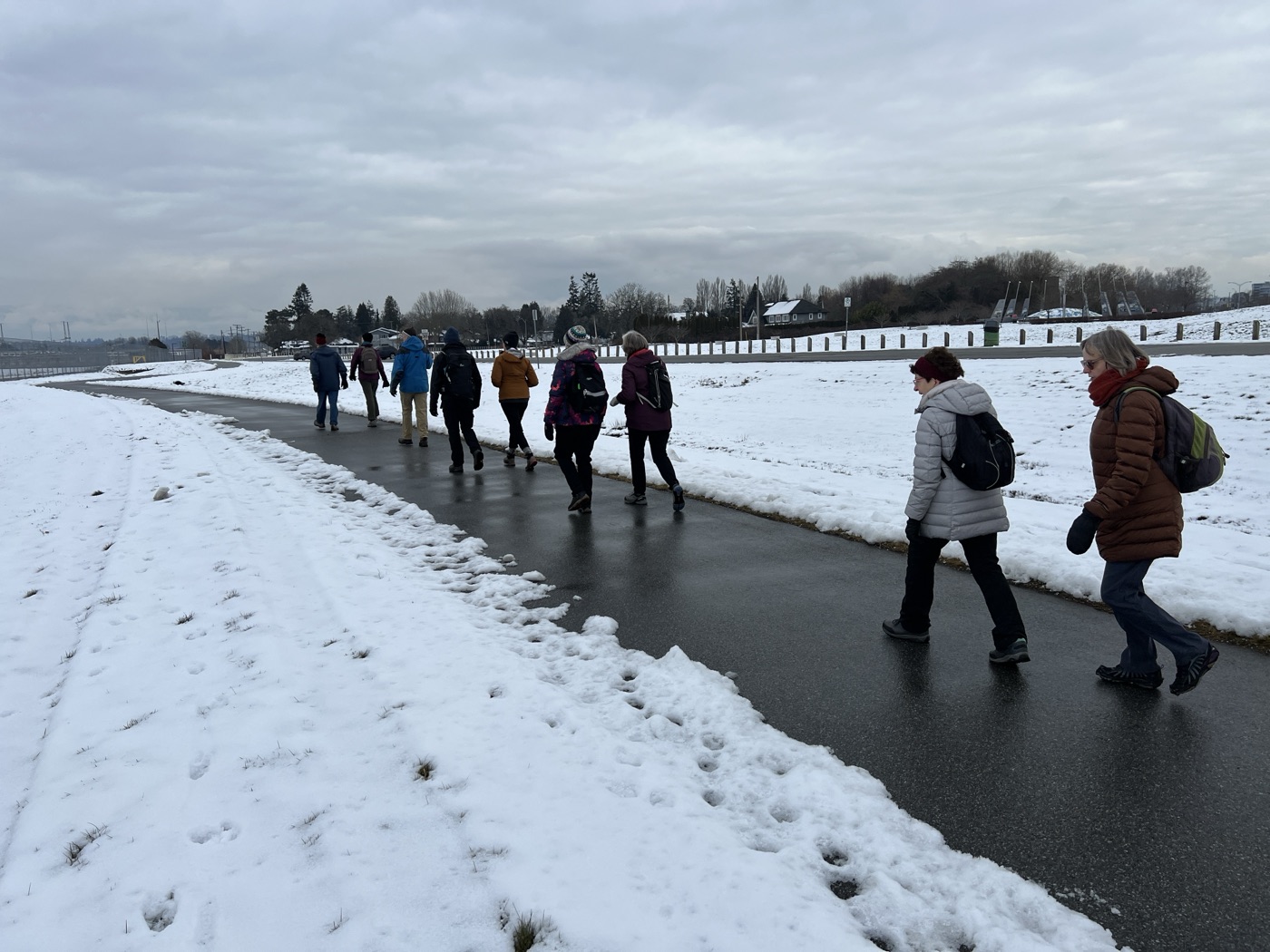
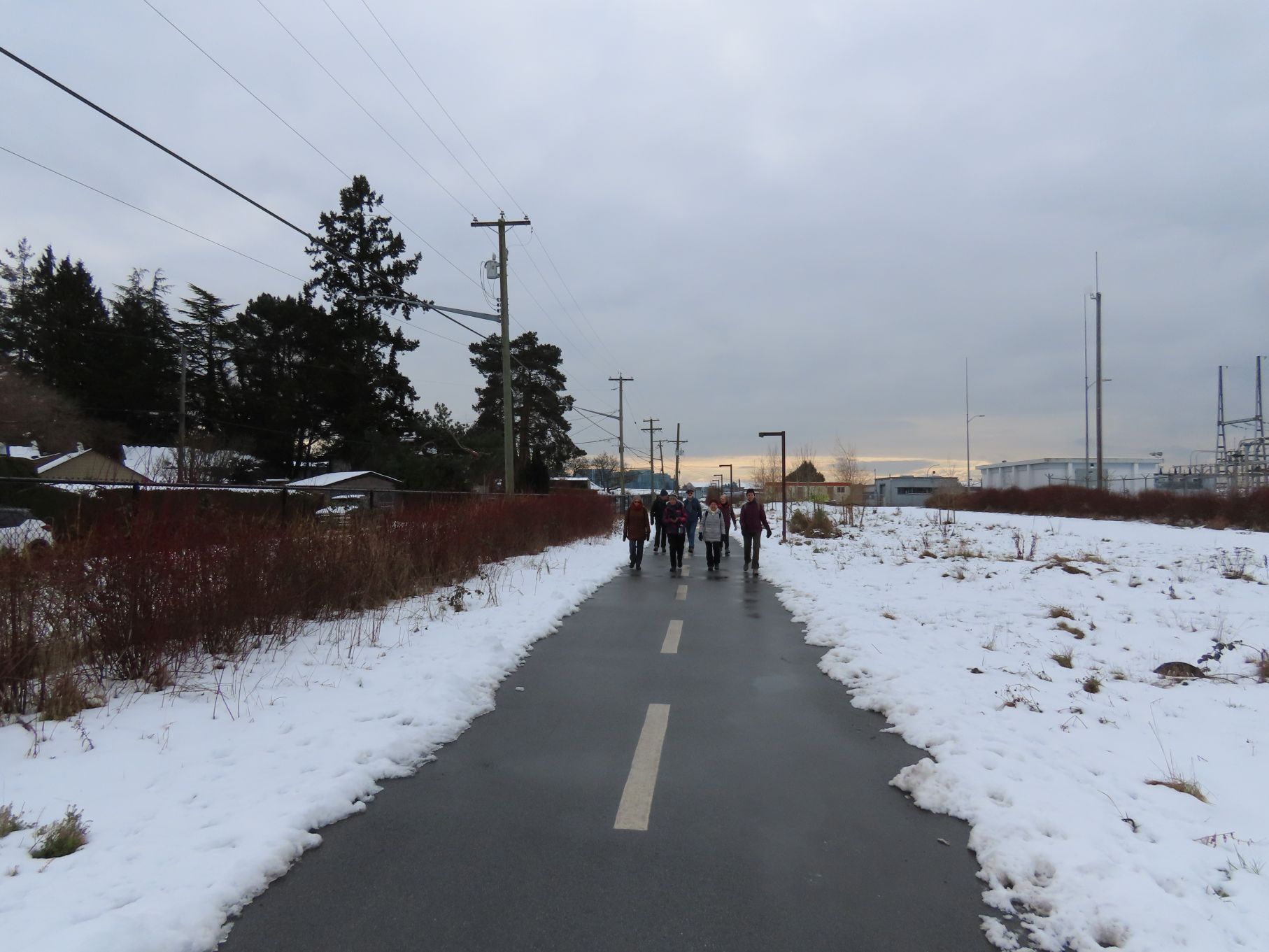
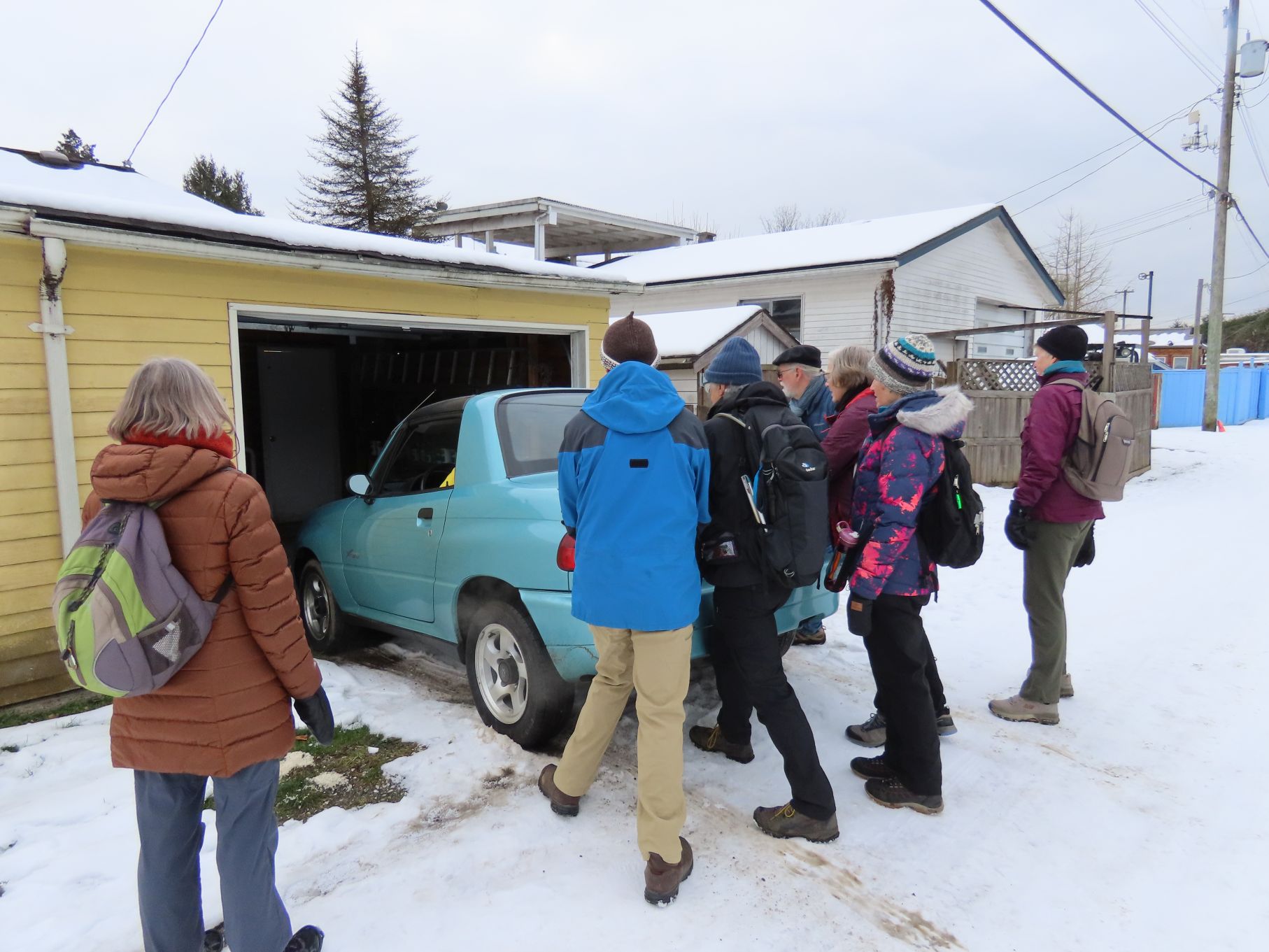
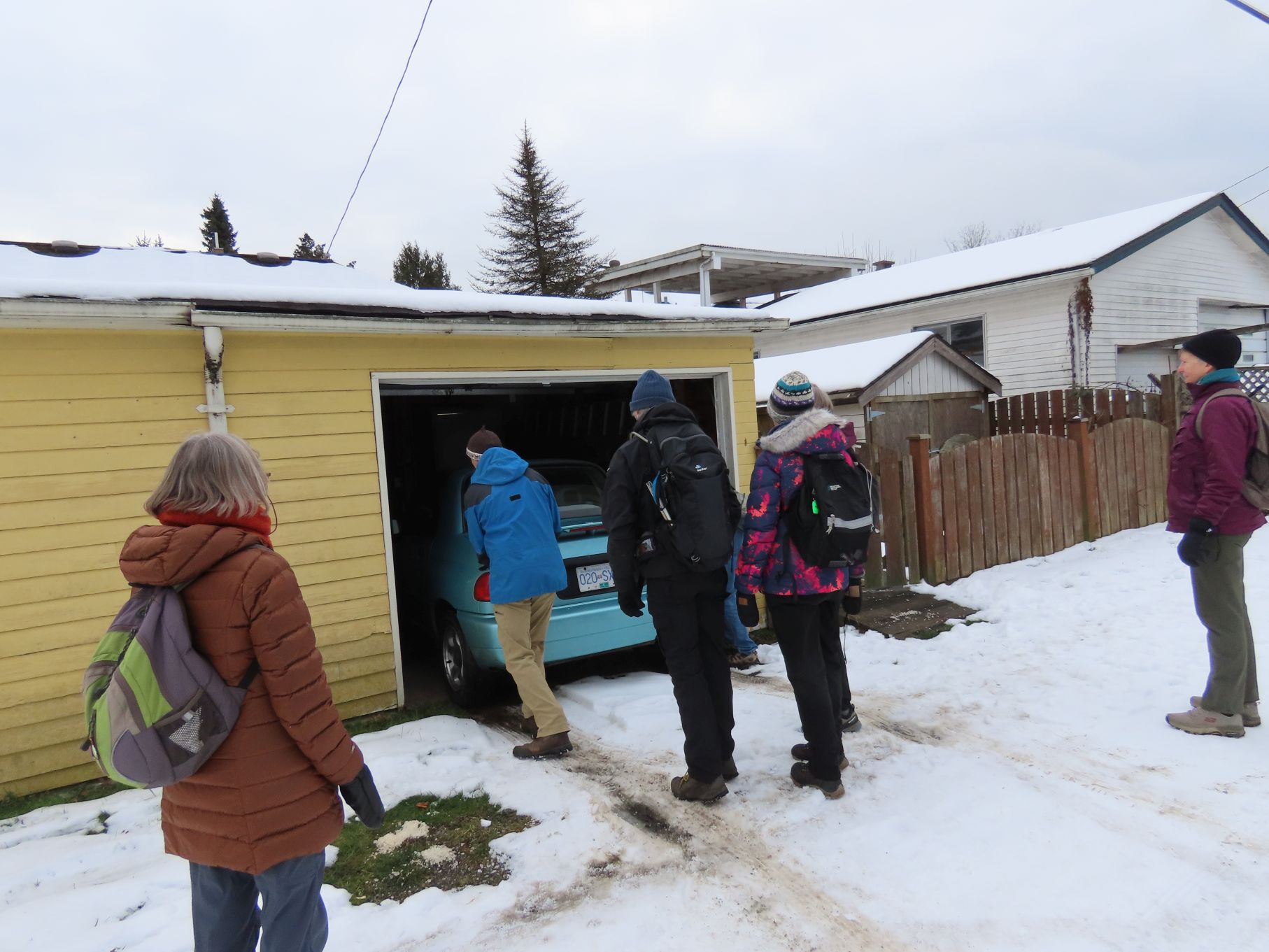
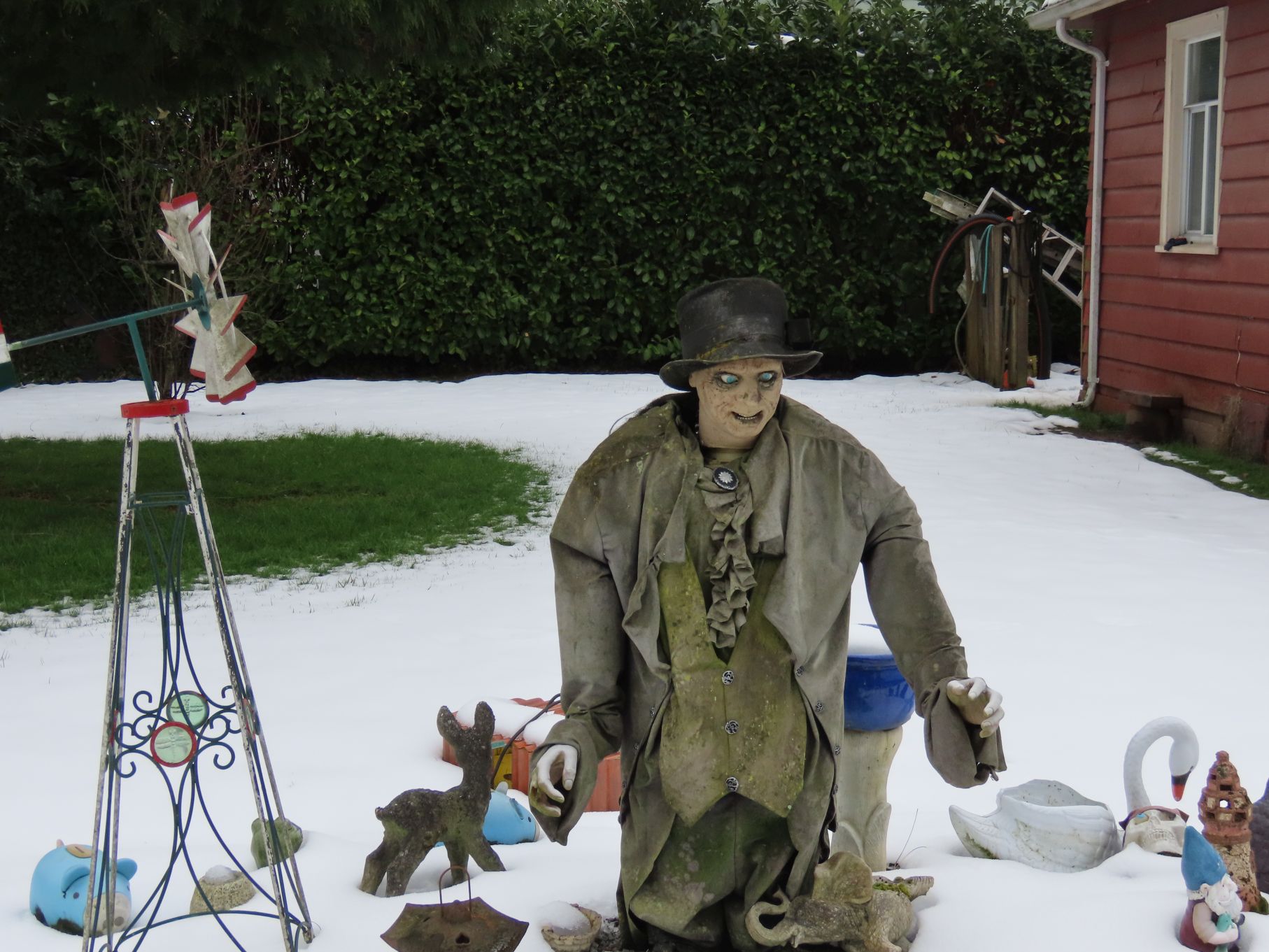
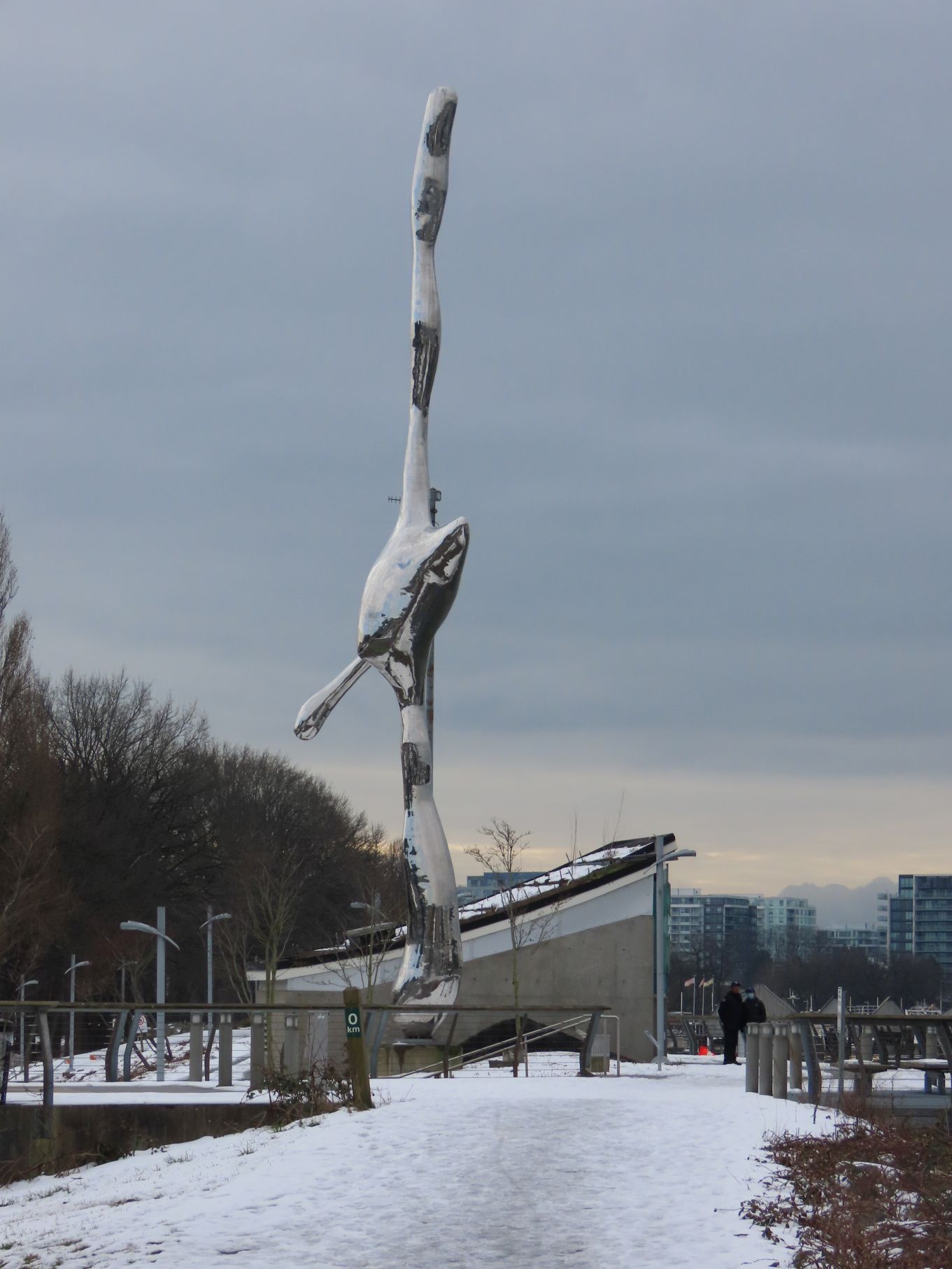
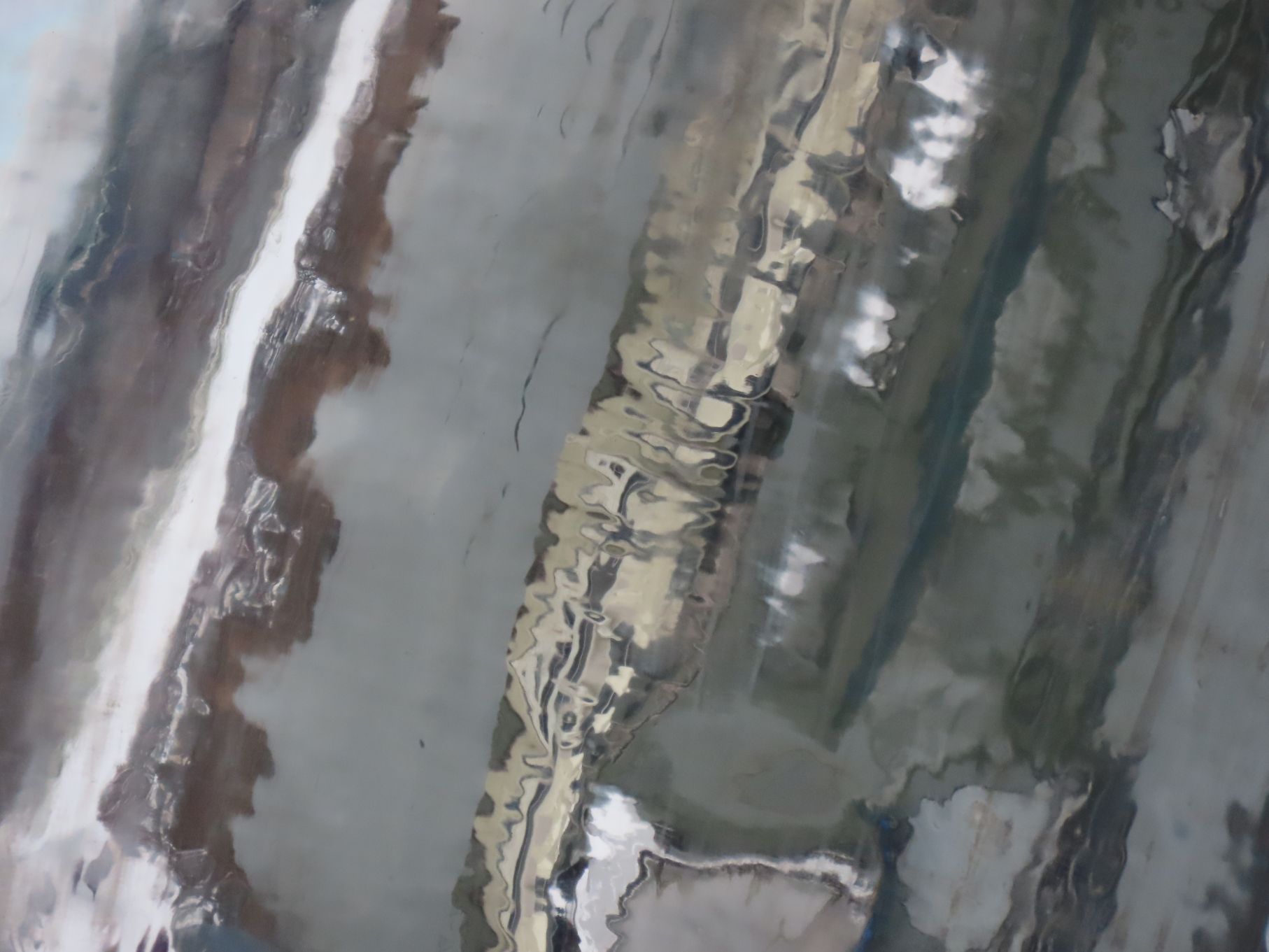
We proceeded through Burkeville, stopping along the way to assist a woman whose car had gotten stuck in the snow. We then crossed the Moray Bridge, the oldest and for a time the only bridge to Sea Island and the airport. Our route then followed River Road back to the south to the starting point. Along the way we passed a large sculpture, Water #10 Vertical. Originally installed as part of the 2009-2011 Vancouver Biennale, it was subsequently purchased and donated to the city of Richmond for permanent display.
The stainless steel sculpture is inspired from pure forms; liquid water or mercury stopped in motion to reveal its shape as a drop of spill caught in the air. Though weighing three tons with no angles, or hard edges, the form flows visually and appears light and fluid.
(Another piece by the same artist, Ren Jun, Freezing Water #7, was displayed in Vanier Park.)

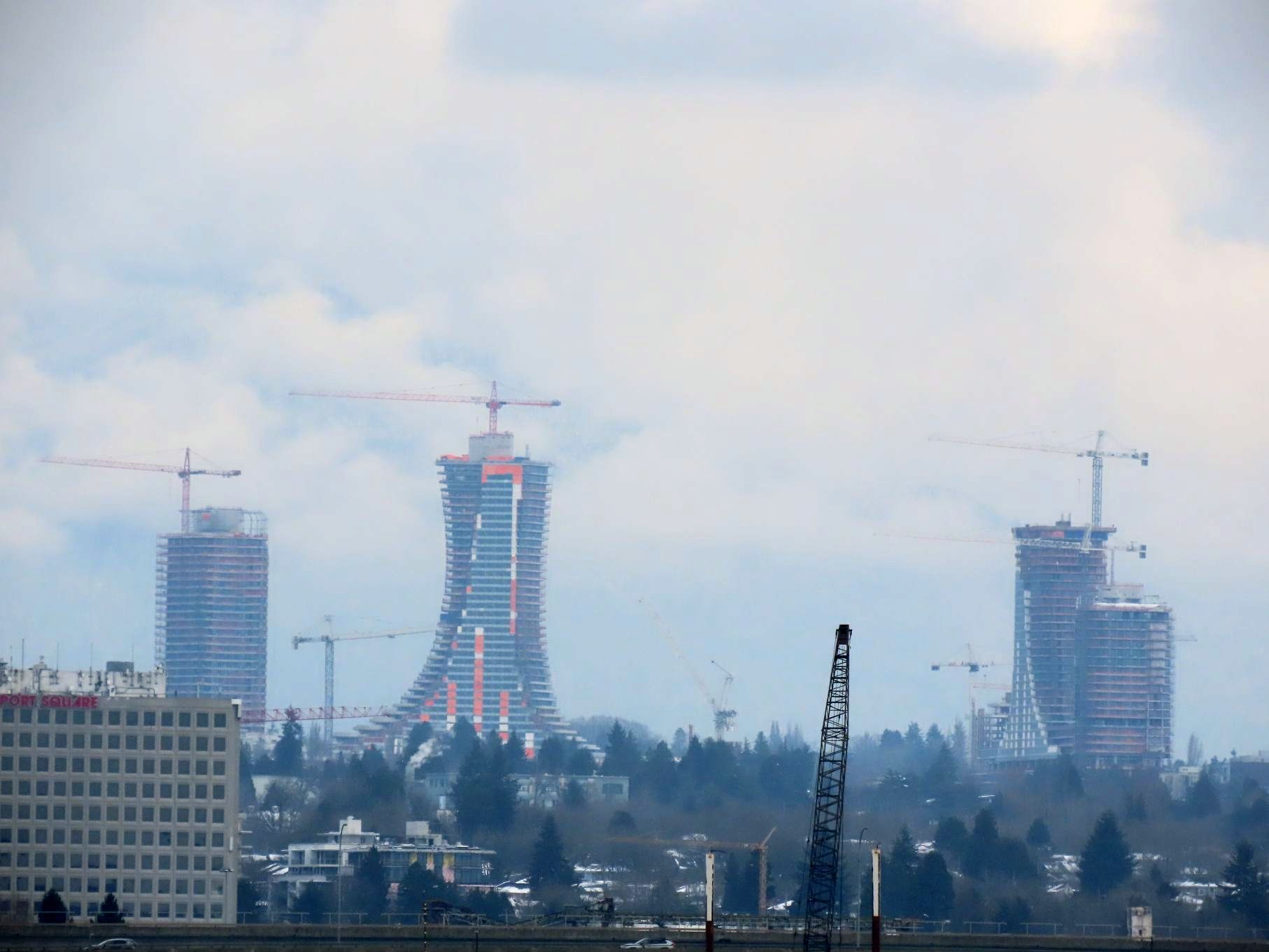
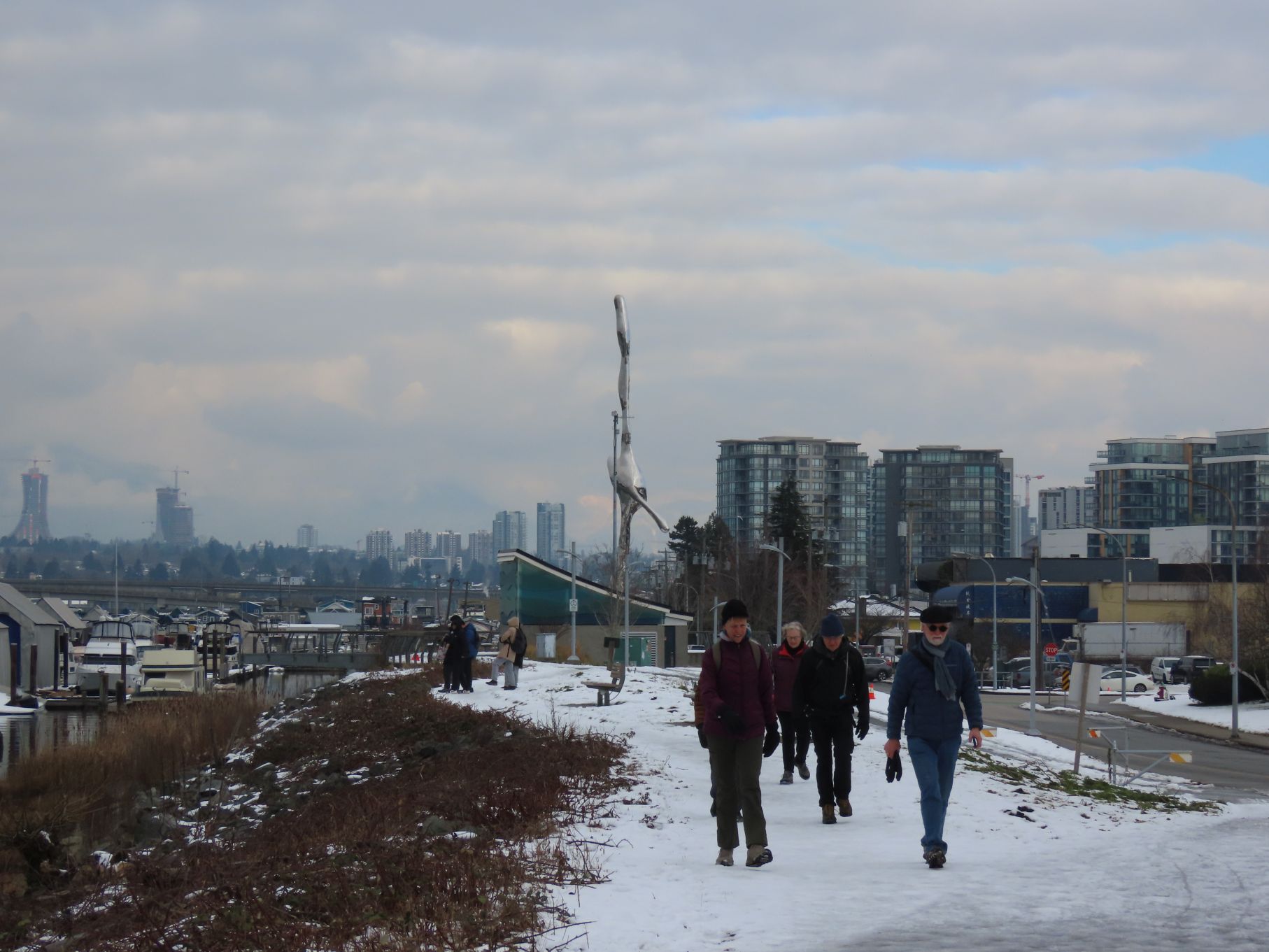
Total distance for the walk was about 8.5 kilometres. Afters were enjoyed at Milltown Pub.
Photo credits to Michael and Jon
 Loopers